



Beijing Badaling Great Wall + Ming Tombs Dingling + Bird's Nest Pure Play One-Day Tour
Choose an option
Prices for Sat 14 Nov
- Admission to: Badaling Great Wall, Ming Tombs Dingling
- Chinese-speaking staff
- Round-trip transfers to and from your hotel
- Equipped with an excellent Chinese driver, providing professional driving services throughout the journey: the driver also wears a multi-language translator, which can assist in cross-language communication and eliminate language barriers.
Not included: Other personal expenses
Ticket: Show e-voucher
Overview
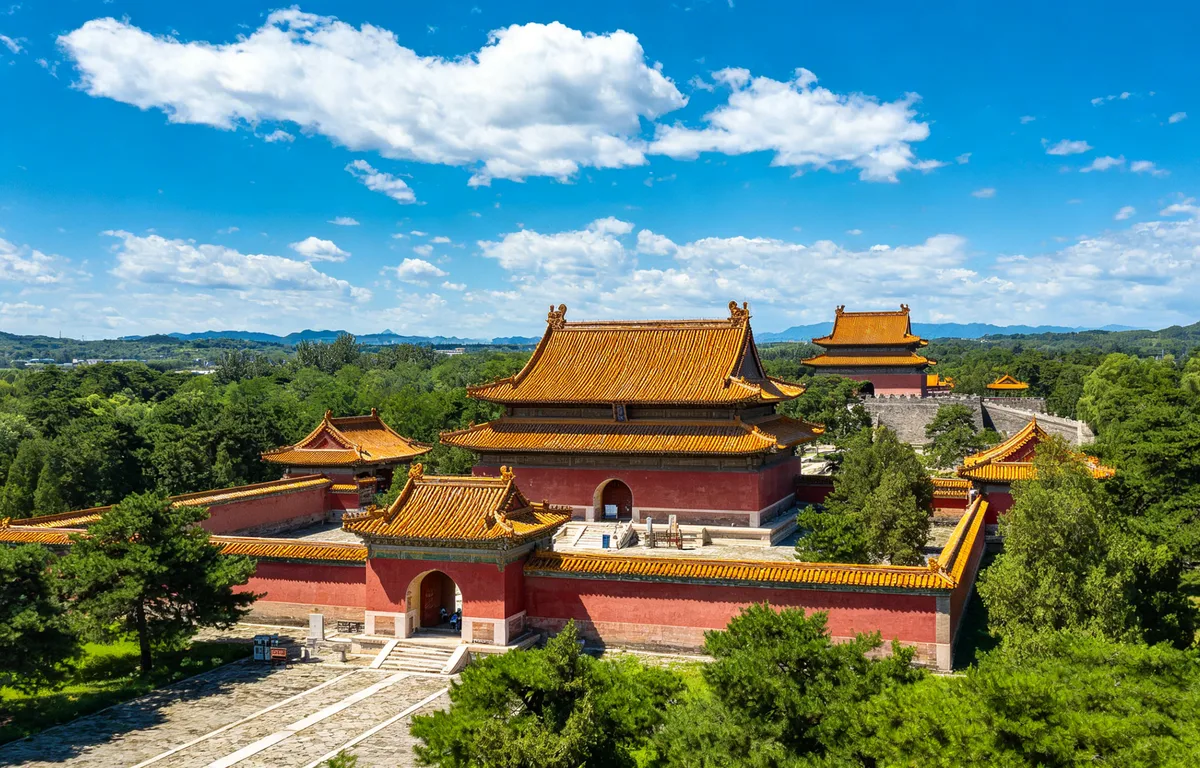
The only route to the Ming Tombs to experience history. Ming Dingling, located at the eastern foot of Dayu Mountain in Changping District, Beijing, is one of the Ming Tombs. It is the joint tomb of Zhu Yijun (1563-1620, reign name Wanli), the 13th emperor of the Ming Dynasty, and his empresses Xiaoduan and Xiaojing. Construction began in the twelfth year of Wanli (1584) and took 6 years to complete. From May 1956 to July 1958, archaeological excavations were carried out on Ming Dingling, making it the only excavated imperial tomb of the Ming Dynasty to date. The overall layout of the ground buildings of Ming Dingling is square in the front and round in the back, symbolizing the ancient Chinese philosophical concept of "heaven is round and earth is square." Ming Dingling became one of the three largest mausoleums among the Thirteen Tombs. Its ground buildings cover a total area of 180,000 square meters, with three wide courtyards in the front and a tall treasure city in the back. In front of the main gate of the mausoleum are three white marble bridges. Beyond the bridges is a tall stele pavilion. Around the pavilion are more than 300 buildings, including the Ancestral Temple Office, the Slaughtering Pavilion, and the Ming Dingling Supervisor. Further back is the outermost wall of the mausoleum, an outer city (a wall outside the wall). The discovery of Ming Dingling provided important physical data for the study of Ming history. Its underground palace structure can be regarded as a representative of the Ming imperial tomb regulations, providing valuable data and references for the study of Ming Dynasty tomb systems. In October 2021, Ming Dingling was selected as one of the "Top 100 Archaeological Discoveries of the Century." The Ming Tombs, including Ming Dingling, have successively been designated as the first batch of key ancient building cultural relics protection units in Beijing, the first batch of national key cultural relics protection units, national key scenic spots, and world cultural heritage sites.
Highlights
What's included
What's not included
Cancellation policy
- Free cancellation with 24 hours' notice.
Additional info
More things to do in Beijing
- Beijing Night Citywalk: Tiananmen Square + Qianmen Street + Dashilar + Houhai + Nanluoguxiang + Gulou Night Tour (English-speaking guide can be upgraded to a private small group tour)
- Beijing Private Tour:Optional Mutianyu/Badaling Great Wall+Ming Tomb
- Explore the Xiangshui Lake Great Wall (freely combine Mutianyu / Ming Tombs / Summer Palace)
- Beijing 4-Hour Small-Group Walking Tour to Forbidden City with Entry and Optional Tian'anmen Square or Coal Hill Park
- Temple of Heaven, Lama Temple, Summer Palace & Peking Duck Bus Tour in Beijing
- One-Day Cultural Tour of Hongluo Temple