
Berlin Private Walking Tour Third Reich, Hitler and World War II
by Insider Tour
Choose from 2 available options
How do you want to book?
Book on Viator Confirmed right away, but you pay full price.$392.52Overview
This private walking tour in Berlin lasts about 3 to 4 hours and includes hotel pickup and drop-off by a professional guide. The tour begins at the site above Hitler’s Führerbunker, where the guide explains the bunker’s layout and its role during Hitler’s final days in World War II. Although the bunker itself is not accessible, the guide provides detailed history about the events that took place there. Next, the tour visits the Bendlerblock, home to the German Resistance Memorial Center. Visitors learn about the July 20, 1944, assassination attempt on Hitler led by Claus von Stauffenberg and the broader German resistance against the Nazi regime. The group then proceeds to the Reichstag building to discuss its political importance during the Third Reich, including the 1933 Reichstag Fire and the damage it suffered during the war. The tour continues to the Memorial to the Murdered Jews of Europe, which consists of 2,711 concrete slabs arranged in a grid pattern to represent the scale of the Holocaust. Visitors can reflect on the memorial’s significance and its role in remembering the victims. The final major stop is the Topography of Terror museum, located on the former site of the SS and Gestapo headquarters. The museum features indoor and outdoor exhibitions with photographs, documents, and testimonies about Nazi political repression and violence. Additional key locations covered during the walk include the Soviet Memorial in Tiergarten, the Detlev-Rohwedder-Haus on Wilhelmstraße, Bebelplatz with its book burning memorial, Anhalter Bahnhof train station, the T4 Memorial for victims of the Nazi euthanasia program, the Moltkebrücke bridge, and a walk along Wilhelmstraße highlighting Nazi government buildings. Each stop includes historical context provided by the guide. The tour requires walking between sites and operates in all weather conditions. Food, drinks, and gratuities are not included.
Highlights
What's included
What's not included
Itinerary
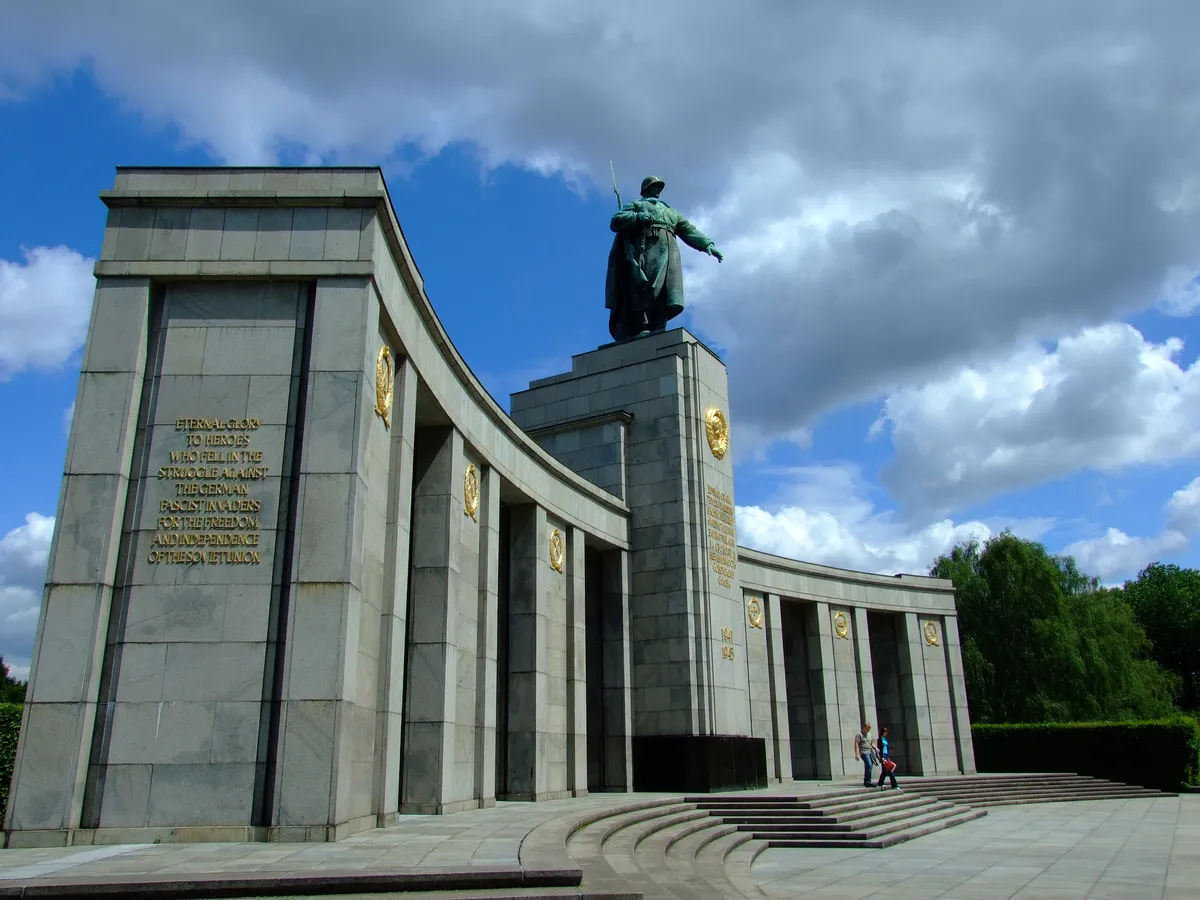
Soviet Memorial Tiergarten
This stop highlights the Soviet Memorial inaugurated in 1949 to honor Soviet soldiers who died during the 1945 Battle of Berlin. The guide explains the memorial’s architecture, including a large soldier statue with sword and shield, and discusses the Soviet Army’s role in ending Nazi control, as well as the memorial’s significance in both Soviet and German history.
10 min
Detlev-Rohwedder-Haus
Located on Wilhelmstraße, this building originally housed the Reichsbank and later the Ministry of Aviation under Hermann Göring during the Third Reich. The guide covers its economic and political functions during Nazi rule and its later use as the German Federal Treasury. Wilhelmstraße itself is discussed as the center of Nazi government decision-making.
10 min
Topography of Terror
Situated on the former site of the SS and Gestapo headquarters, this site features indoor and outdoor exhibitions about the Nazi regime’s rise, political repression, and terror tactics. The guide highlights photographs, documents, and testimonies detailing the impact on victims and society, emphasizing the importance of remembering these events.
20 min
German Resistance Memorial Center
At the Bendlerblock, this memorial focuses on German resistance against the Nazis. Exhibits detail various opposition groups and key figures like Claus von Stauffenberg, who attempted to assassinate Hitler on July 20, 1944. The guide discusses their motivations, actions, and the consequences they faced.
20 min
Bebelplatz
Known for the 1933 book burning of thousands of 'un-German' books, this square includes notable buildings such as the State Opera House and Humboldt University. Beneath the square is a memorial of empty bookshelves symbolizing lost literature. The guide explains the square’s historical context and the significance of censorship during the Nazi era.
10 min
Reichstag Building
Completed in 1894, the Reichstag became central to Germany’s politics, especially during Nazi rule. The guide covers events such as the 1933 Reichstag Fire used by Nazis to suppress opposition, wartime damage, and its later restoration as a democracy symbol.
15 min
The Holocaust Memorial - Memorial to the Murdered Jews of Europe
This memorial consists of 2,711 concrete slabs of different heights arranged in a grid to create a disorienting effect symbolizing the Holocaust’s scale. The guide explains the design’s meaning and the memorial’s role in remembering European Jews killed under Nazi policies.
15 min
Fuhrerbunker
Located beneath the Reich Chancellery, this underground bunker was Hitler’s last refuge during World War II’s final months. The guide describes the bunker’s layout, the events inside during the regime’s collapse, and the postwar destruction of the structure.
10 min
Anhalter Bahnhof
Once a major Berlin train station, it played a role in the deportation of Jews during the Nazi era. The guide points out the station’s façade and shares stories of those who passed through, highlighting its place in Holocaust history and current memorials on site.
10 min
T4 - Memorial for the Victims of the Nazi Euthanasia Program
Situated on Tiergartenstraße 4, this memorial honors victims of the Nazi euthanasia program targeting people with disabilities and mental illnesses. The guide discusses the program’s history and effects, along with the memorial’s design and informational displays.
10 min
Moltkebrucke
This bridge was strategically important in April 1945 when Soviet forces crossed it during the final assault on Berlin. The guide recounts the battles near the bridge and its significance as a wartime landmark.
10 min
Wilhelmstraße
This avenue was central to Nazi government operations. The guide points out key buildings including the Detlev-Rohwedder-Haus and describes its use by ministries and offices that shaped Nazi policies and wartime activities.
20 min
Languages
Cancellation policy
- Cancel at least 24 hours before start for a full refund.
Additional info
More things to do in Berlin
- Berlin Sachsenhausen Concentration Camp and Potsdam 7-Hour Day Tour
- Berlin Walking Tour with Reichstag, Berliner Dom, Brandenburg Gate & Checkpoint Charlie
- BLINDED by DELIGHT Grand Show at Friedrichstadt-Palast Berlin
- Private Walking Tour of Berlin's World War 2 and Cold War Sites