
Historic Center & Getsemaní Shared Tour in Cartagena
by NEXPERIENCE
Choose from 1 available option
How do you want to book?
Book on Viator Confirmed right away, but you pay full price.$26Overview
This shared walking tour in Cartagena lasts about two to three hours and covers the Historic Center and the Getsemaní neighborhood. The tour begins at Camellón de Los Mártires (Plaza de Cervantes), where the guide explains the indigenous peoples present before and during the Spanish arrival. Next, the group moves to the Torre del Reloj (Clock Tower), known as the "Golden Key of Cartagena," and visits Plaza del Ecuador and Plaza del Esclavo, starting the route that explores the history of enslavement through Porto Carrero and Candilejo streets. The tour continues to Portal de Los Dulces, highlighting the role of women during slavery and their descendants' traditions. At Plaza de la Aduana, participants learn about the commercialization of goods, including enslaved people, while viewing important buildings such as the Municipal Hall. The group visits the Museo de Arte Moderno Cartagena, which features Caribbean and Latin American art from the 1950s, as well as the Gold Museum with indigenous pieces and the Emerald Museum showcasing local gemstones. The Sanctuary of Saint Peter Claver is next, where the architecture of the church and museum-monastery dedicated to the patron of slaves is explained, including its role as a Human Rights headquarters. The tour proceeds to Baluarte de San Ignacio, a bastion built to defend the "Bay of Souls" from pirate attacks, followed by Plaza de Bolívar, honoring the precursor of Independence and offering a place to rest. Participants then visit Parque Centenario, a green area that was once a railway station and now preserves tropical dry forest species such as sloths, squirrels, and iguanas. The route continues into the Getsemaní neighborhood, known for its cultural corridor with colorful umbrellas, graffiti, and distinctive architecture. The tour ends at Plaza de La Trinidad and Callejón Ancho, passing by the church and square of the Holy Trinity, with basic instruction in dancing Champeta and Salsa to the sound of local music. The tour includes a professional guide and gratuities.
Highlights
What's included
Itinerary
Cartagena
The tour begins with a one-hour exploration of Cartagena’s historic center, focusing on the stories and legends of the walled downtown and San Diego districts. This area features walls, streets, convents, and colonial houses, with references to the Caribbean cultural mix and the writings of Gabriel García Márquez, including his famous novel "One Hundred Years of Solitude."
60 min
Camellon de los Martires
At Camellón de Los Mártires (Plaza de Cervantes), the guide covers the indigenous peoples who lived in the area before and during the Spanish arrival, setting the historical context for the tour.
10 min
Torre del Reloj
The group proceeds to the Torre del Reloj, known as the "Golden Key of Cartagena," located near Plaza del Ecuador and Plaza del Esclavo. Here, the guide introduces Pedro de Heredía and the route connected to the history of enslavement through nearby streets Porto Carrero and Candilejo.
10 min
Portal de Los Dulces
Next stop is the Portal de Los Dulces, a site symbolizing female work during slavery times, with an explanation of how descendants continue these traditions today.
10 min
Plaza de la Aduana
The tour continues to Plaza de la Aduana, a historically important commercial hub including the trade of enslaved people. The guide points out significant buildings such as the Municipal Hall.
10 min
Museo de Arte Moderno Cartagena
The group visits the Museum of Modern Art, displaying Caribbean and Latin American art from the 1950s onward. Nearby, the Gold Museum showcases indigenous artifacts from the Colombian Caribbean, and the Emerald Museum presents gemstones considered among the world’s finest.
10 min
Sanctuary of Saint Peter Claver
The Sanctuary of Saint Peter Claver is visited, highlighting the church and museum-monastery dedicated to the Jesuit priest known as the "Slave of the Slaves." The site is also the headquarters for human rights in Cartagena.
10 min
Baluarte de San Ignacio
The tour then reaches Baluarte de San Ignacio, a bastion built to defend Cartagena’s Bay of Souls against pirate attacks. The guide explains the military history behind the city’s walls.
10 min
Plaza de Bolivar
At Plaza Bolívar, the guide recounts stories of pirates and corsairs and describes Spanish military architecture and strategy. This square honors Simón Bolívar, a leader in Colombia’s independence, and serves as a rest point.
10 min
Parque centenario
The group visits Centennial Park, one of Cartagena’s main green spaces and former railway station. The park is home to local wildlife like sloths, squirrels, and iguanas and contains trees typical of the Tropical Dry Forest.
10 min
Barrio Getsemani
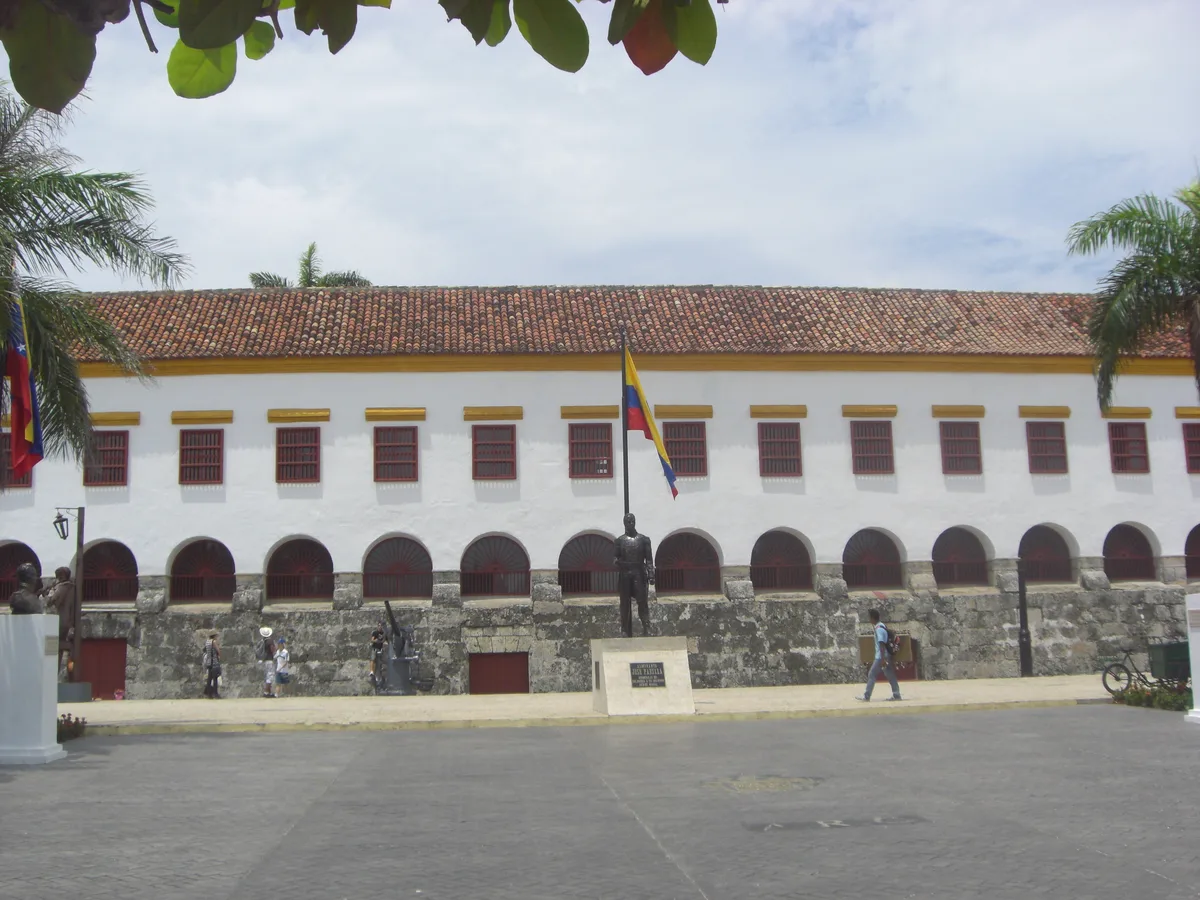
The tour continues to Getsemaní, a neighborhood known for its cultural corridor featuring colorful murals, umbrellas as symbols, and distinctive architecture.
10 min
Plaza de La Trinidad
The final stop is Plaza de La Trinidad and the nearby Callejón Ancho. The route ends along Calle San Juan with the sounds of salsa and African Champeta music, passing by the church and square of the Holy Trinity.
10 min
Meeting point
Next to the traffic light of the "Camellón de Los Mártires" (square in front of the Clock Tower).
End point
The tour ends at Plaza del Pozo, in the Getsemaní neighborhood.
Languages
Cancellation policy
- Cancel at least 24 hours before start for a full refund.
Additional info
More things to do in Cartagena
- Transport to Baru with Lunch included in Cartagena
- Airport Private Transfer to Hotel in Cartagena Urban City
- Cartagena Full-Day Guided Boat Tour to Cholon Island with Lunch and Drinks
- Cartagena Full-Day Tour to 3 Private Islands with Snorkeling and Lunch
- Private Arrival or Departure Transfer at Rafael Nuñez Airport in Cartagena
- Cartagena ATV Tour with Beach Ride, Mountain Trails, and Lunch