
Istanbul Sunset Cruise on Luxury Yacht with Guided Tour
by Bosphorus Tour Organisations
Choose from 3 available options
How do you want to book?
Book on Viator Confirmed right away, but you pay full price.$81.06Overview
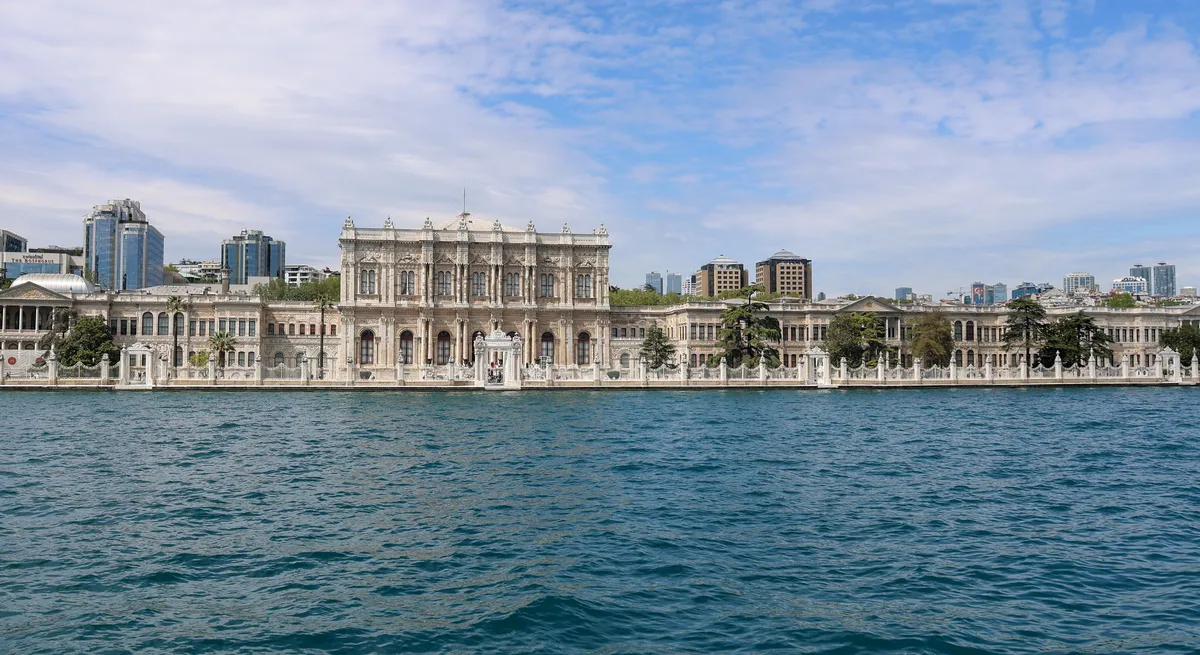
The tour begins with boarding a luxury yacht for a two-hour cruise along the Bosphorus Strait, sailing past both the European and Asian shores of Istanbul during sunset. The guided tour covers major landmarks including 19th-century palaces such as Dolmabahçe Palace and Çırağan Palace, as well as the Rumeli and Anadolu Fortresses. The yacht passes through the Beşiktaş district and continues to neighborhoods like Ortaköy, Bebek, Arnavutköy, and Üsküdar. Important sights along the route include Büyük Mecidiye Mosque (Ortaköy Mosque), the Bosphorus Bridge, Fatih Sultan Mehmet Bridge, Kuruçeşme, Rumeli Fortress, Anadolu Hisari Fort, Kuleli Military High School, Beylerbeyi Palace, Maiden’s Tower, Galata Bridge, Galata Tower, and the Galataport area. Throughout the cruise, an experienced guide provides informative commentary about the landmarks and their history. Onboard, guests receive complimentary refreshments including a daily prepared plate of fresh seasonal fruits, baklava, cookies, homemade lemonade with fresh mint, water, tea, and coffee. The yacht is equipped with restroom facilities. Note that on May 1st, due to Labour and Solidarity Day, the departure point changes to Kuruçeşme, with updated meeting details provided in advance. Hotel pickup and drop-off are not included, and alcoholic beverages are not served. This tour is not recommended for travelers prone to seasickness or vertigo.
Highlights
What's included
What's not included
Itinerary
Dolmabahce Palace
Dolmabahçe Palace is an Ottoman-era palace covering 250,000 m² in Istanbul's Beşiktaş district, situated between Dolmabahçe Street from Kabataş to Beşiktaş and the Bosphorus. It lies on the left bank at the Bosphorus entrance from the Sea of Marmara, opposite Uskudar and Kuzguncuk. Once a cove for anchoring ships, it later became the sultanate's preferred residence, reflecting centuries of history and the clear waters of the Bosphorus.
Beşiktaş District
Beşiktaş is a historic and lively district on Istanbul's European side along the Bosphorus. Known for its active social scene, cafés, seaside views, and landmarks like Dolmabahçe Palace and Beşiktaş Square, it is also home to Beşiktaş JK, one of Turkey’s prominent football clubs, attracting locals and visitors alike.
Çırağan Palace Grounds
Commissioned by Sultan Abdulaziz and designed by architect Sarkis Balyan, Çırağan Palace replaced a wooden summer palace built by Selim III in 1800. Completed in 1871, the marble palace covers 80,000 square meters. After Abdulaziz's deposition, he and his family were imprisoned here, as was Murat V for 29 years after his deposition. Used as the House of Parliament after 1908, it was damaged by fire in 1910. The grounds later served as the Şeref Stadium before restoration in the early 1990s and reopening as a hotel.
Ortakoy
Ortaköy is a district within Beşiktaş on Istanbul's European side, located on slopes opening to the Bosphorus coast. It borders Kuruçeşme, Ulus, Levazım, Balmumcu, Yıldız, and has Defterdarburnu to the north. The Ortaköy Bazaar, known as an "intellectual market," features souvenir shops, cafés, bars, and restaurants, lively throughout the day. Activity typically begins after 10:00 am.
Buyuk Mecidiye Camii
Also called Ortaköy Mosque, this 19th-century mosque was built in 1856 during the Ottoman period on the Bosphorus shore in Istanbul. It is noted for its elegant design, large windows, and waterfront location. The mosque is a well-known landmark, often photographed with the Bosphorus Bridge in the background.
Bosphorus Bridge
The Bosphorus Bridge, one of two suspension bridges over the Bosphorus, connects Ortaköy on the European side with Beylerbeyi on the Anatolian side. Construction began in 1970, and it opened on 29 October 1973, marking the Republic's 50th anniversary. The bridge is a key transportation link and a symbol of Istanbul, also featured in the Istanbul Eurasia Marathon.
Kuruçeşme Area
Kuruçeşme is a neighborhood in Beşiktaş along the European Bosphorus shore. It is recognized for its seaside promenade, upscale residences, restaurants, and nightlife. The area offers views of the Bosphorus and maintains an elegant atmosphere, attracting both locals and visitors.
Bebek Neighborhood
Bebek is a historic district on the European Bosphorus shore, bordered by Arnavutköy, Etiler, and Rumeli Hisarı. Its name means 'baby,' referring to its appealing location on the Bosphorus. A popular residential area since Ottoman times, Bebek features historical buildings like Boğaziçi University and waterfront mansions, alongside restaurants with Bosphorus views.
Arnavutköy District
Arnavutköy is a charming neighborhood on Istanbul's European side along the Bosphorus. It is known for colorful historic wooden houses, narrow streets, and seaside cafés. The relaxed atmosphere and scenic waterfront make it a favored spot for walks, photography, and traditional fish restaurants.
Rumeli Fortress
Located in Sarıyer, Rumeli Fortress was built opposite Anadolu Hisarı by order of Sultan Mehmet the Conqueror in 1453 at the Bosphorus' narrowest point. Completed in three months, it protected against naval attacks before Istanbul's conquest and served as a maritime inspection point afterward. Wooden houses once filled the interior but were removed during 1953 restoration. The fortress now functions as an open-air theater and museum, hosting summer concerts.
Fatih Sultan Mehmet Bridge
The Fatih Sultan Mehmet Bridge, Istanbul's second Bosphorus bridge, connects Kavacık and Hisarüstü. Construction started in 1986, and the bridge opened on 3 July 1988. It is the 14th largest steel suspension bridge worldwide. Along with the Bosphorus Bridge and ferries, it carries a significant portion of Istanbul's trans-Bosphorus traffic and is a notable part of the city's skyline.
Kucuksu Pavilion
Anadolu Hisarı is situated in Beykoz on Istanbul's Asian side at the Bosphorus' narrowest point. Built in 1395 by Beyazıt I, it consists of a citadel and outer castle walls. After Istanbul's conquest, it lost strategic importance and was converted into a military hospital. The surrounding area developed with waterfront houses and old mansions among the ruins. Restoration from 1991 to 1993 made it a museum, but it is not open to the public. Visitors can access only the outer walls, with a road passing through.
Anadolu Hisari Fort
Anadolu Hisarı, located in Beykoz on the Asian side at the Bosphorus' narrowest point, was built in 1395 by Beyazıt I. It includes a citadel and exterior walls. After Istanbul's conquest, it became a military hospital. The area around it developed with waterfront houses and mansions. Restored between 1991 and 1993, it was converted into a museum but remains closed to the public except for the outer walls, with a road running through it.
Kuleli Military High School
Kuleli Military High School is a 19th-century Ottoman-era building on Istanbul's Asian side in Üsküdar along the Bosphorus. Known for its grand waterfront architecture and distinctive towers, it played a significant role in Turkey’s military education history and remains a notable landmark on the Bosphorus.
Beylerbeyi Palace
Beylerbeyi Palace, an Ottoman summer palace from the 1860s, is located beneath the Bosphorus Bridge. Designed by Sarkis Balyan, it combines Renaissance, Baroque, and Eastern and Western architectural styles. The two-story stone building covers about 2,500 square meters on a rectangular floor. The south side served as the Imperial Mabeyn, the north as Valide Sultan's Apartment. It contains six halls, 24 rooms, one hamam, and one bathroom. The palace includes a lily pond and a large garden.
Üsküdar District
Üsküdar is one of Istanbul's oldest districts on the Asian side along the Bosphorus. It is known for its mosques, seaside squares, and landmarks like Maiden’s Tower. The district offers a traditional atmosphere, scenic waterfront, and views of the European side, popular with locals and visitors.
Maiden's Tower
The Maiden's Tower (Kız Kulesi) is a distinctive Bosphorus landmark on a small island about 200 meters from Üsküdar's shore. It is associated with legends, notably one about a sultan who built the tower to protect his daughter from a prophecy that she would die from a snake bite on her 18th birthday. Despite the precautions, she was bitten by a snake hidden in a fruit basket on that day and died in her father's arms, giving the tower its name.
Galata Koprusu
The Galata Bridge, spanning the Golden Horn, has a history dating to 1845. It has undergone several changes, with the most recent bridge built after a fire in 1992. The old bridge was moved to Haliç. The bridge is significant in Istanbul's daily life, literature, and culture. It features restaurants, cafés, and hookah lounges below, with tram and pedestrian traffic above, offering views of the city, especially in the evening. Street vendors, fishermen, and nearby ferries contribute to its lively atmosphere.
Galata Tower
Constructed by the Genoese in 1348, Galata Tower is nine stories tall and 66.90 meters high, once Istanbul's tallest building. During the Ottoman era, it served various purposes including a fire observatory and jail. In 1632, Hezarfen Ahmet Çelebi reportedly glided from its top across the Bosphorus to Üsküdar with self-made wings. A storm in 1875 destroyed its conical roof, which was restored in the 1960s along with interior renovations. The tower is open to the public and houses a restaurant and café on the upper floor, offering panoramic city views.
Galataport
Galataport is a modern port and social area in Istanbul's Karaköy district. It combines historical elements with contemporary architecture and includes restaurants, cafés, shops, and cultural venues. The underground terminal manages cruise ship traffic efficiently, making it a notable example of Istanbul's blend of culture and modernity.
Meeting point
Meeting Point: KABATAŞ SQUARE (opposite Kabataş Tram Station) Our team will be waiting across from BELTUR café, near the FUNICULAR ELEVATOR, holding a sign that says Golden City Tours. Please arrive 15 minutes before the cruise departure time.
End point
Meeting Point: KABATAŞ SQUARE (opposite Kabataş Tram Station) Our team will be waiting across from BELTUR café, near the FUNICULAR ELEVATOR, holding a sign that says Golden City Tours. Please arrive 15 minutes before the cruise departure time.
Languages
Cancellation policy
- Cancel at least 24 hours before start for a full refund.
Additional info
More things to do in Istanbul
- Istanbul Airport Round-Trip Private Transfer to Taksim, Fatih, Besiktas, and Sisli Hotels
- Istanbul Bosphorus Daytime or Sunset Sightseeing Cruise with Audio Guide
- Istanbul Rooftop Flying Dress Photo Shoot
- Istanbul Whirling Dervish Ceremony and Sufi Music Concert - Go on a Spiritual Journey
- Istanbul Private 1-Hour Luxury Yacht on Bosphorus
- Istanbul Bosphorus Explorer 3-Hour Cruise with Asian Side Visit