
Kamakura & Enoshima 1-Day Bus Tour from Tokyo
by VIP Japan Tours
Choose from 2 available options
How do you want to book?
Book on Viator Confirmed right away, but you pay full price.$99.86Overview
This full-day bus tour lasting about 9 to 10 hours takes visitors from Tokyo to Kamakura and Enoshima with an English/Chinese-speaking guide. The tour includes entrance fees to Hase-dera and Kōtoku-in temples and air-conditioned transport. The day starts at Tsurugaoka Hachiman Shrine, Kamakura's main Shinto shrine. Visitors can walk through the large torii gate to see ponds with koi fish, bridges, gardens, and the main shrine buildings. After exploring the shrine area, there is time to walk along Komachi Street, a lively shopping street offering local seafood, traditional snacks, and souvenirs. Lunch is not included, so visitors can choose where to eat. Next, the tour visits Hase-dera Temple, home to a large wooden statue of the eleven-headed Kannon, the Goddess of Mercy. The temple grounds also provide views over Kamakura. Then the group moves on to Kōtoku-in Temple to see the Great Buddha of Kamakura, an 11-meter-tall bronze statue that is a national treasure. Visitors can enter the statue’s interior. The final stop is Enoshima, a small island west of Kamakura. Visitors can explore shrines dedicated to Benzaiten, walk along coastal paths, and enjoy ocean views. On clear days, views of Mt. Fuji and the Tanzawa mountains are visible from the island. The tour ends near Shinjuku Station in Tokyo.
Highlights
What's included
What's not included
Itinerary
Tsurugaoka Hachimangu Shrine
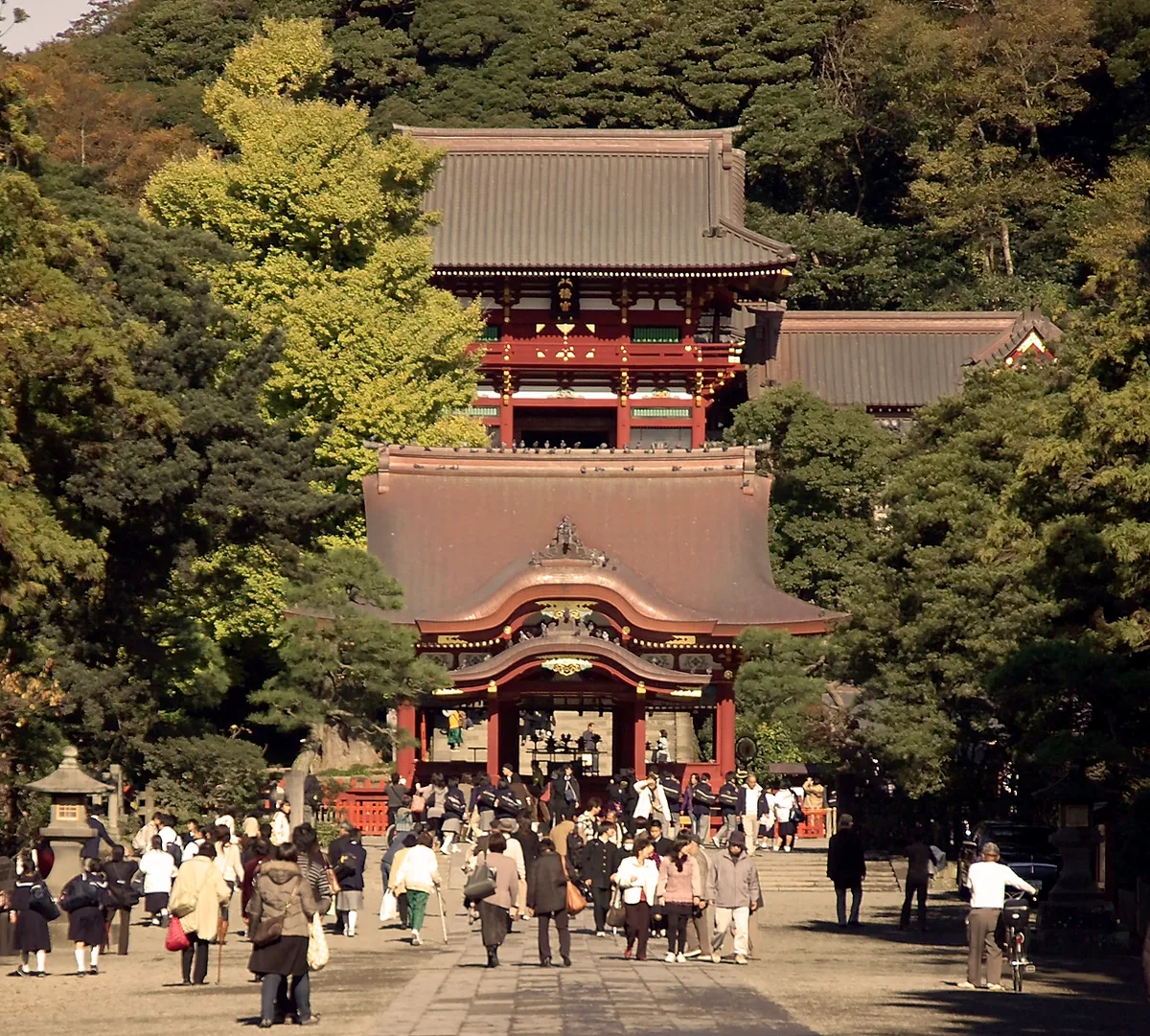
The tour begins at Tsurugaoka Hachiman Shrine, Kamakura's main Shinto shrine and spiritual center. Visitors pass through a large torii gate into peaceful grounds with koi ponds, bridges, and gardens. The main hall and smaller shrines represent aspects of Japanese cultural heritage. After exploring the shrine, visitors walk down Komachi Street, a busy shopping area with local food, snacks, and souvenirs. This street offers many options for lunch.
120 min
Maruyamainari Shrine
Komachi Street itself is a popular shopping area in Kamakura, filled with unique snacks, souvenirs, and handmade crafts. Visitors can shop and eat while experiencing the atmosphere of this busy street.
Shirahata Shrine, Kamakura Hachimangu Shrine
Kōtoku-in Temple houses the Great Buddha of Kamakura, a large bronze Amida Buddha statue standing over 11 meters tall. The open-air statue is a national treasure and visitors have the option to enter inside and explore its hollow interior.
30 min
Kamakura Komachidori
Hase-dera Temple is known for its large wooden statue of the eleven-headed Kannon, the Goddess of Mercy. The statue is one of the largest of its kind in Japan and is surrounded by landscaped gardens. The temple grounds also offer wide views over Kamakura.
50 min
Hasedera Temple
The last main stop is Enoshima Island, located west of Kamakura. The island has several shrines, including Enoshima Shrine, set among greenery. Visitors can enjoy ocean views from several points and walk along coastal paths. On clear days, views extend to Mt. Fuji and the Tanzawa mountains. The area is quiet and scenic.
120 min
Kotoku-in - Great Buddha of Kamakura
Enoshima Island is home to a shrine complex dedicated to Benzaiten, the goddess of music, wealth, and wisdom. The three connected shrines—Hetsu-no-miya, Nakatsu-no-miya, and Okutsu-no-miya—are linked by paths through green areas with ocean views.
Enoshima Island
The island also includes a small hill with the oldest shrine pavilion dating from the Muromachi period. Red flags surround the shrine, placed by people wishing for business success.
Enoshima Benzaiten Nakamisedori
A museum on the island was founded in response to damage caused by the 1923 Taisho Kanto Earthquake. It preserves cultural properties that were lost in that event.
Enoshima Shrine
Shirahata Shrine lies next to Yanagihara Pond east of Wakamiya Shrine. It enshrines Minamoto no Yoritomo, founder of the Kamakura shogunate, and his son Sanetomo, the third Kamakura shogun.
Enoshima Sea Candle
The Enoshima Sea Candle is an observatory lighthouse located in Samuel Cocking Garden. It reopened after renovations in 2003 and stands 59.8 meters tall, with a height of 119.6 meters above sea level. The observation deck offers 360-degree views including Mt. Fuji and the Tanzawa mountains.
Zeniarai Benten Ugafuku Shrine
Zeniarai Benten Shrine, located in western Kamakura, is popular for its spring water where visitors wash money, believed to double it.
Kamakura Museum of National Treasures
The observatory lighthouse in Enoshima's Samuel Cocking Garden reopened on April 29, 2003, after renovations. It stands 59.8m tall, with its top reaching 119.6m above sea level. The structure is recognized as a symbol of Enoshima. From the observation deck, visitors can see Mt. Fuji and the Tanzawa mountains, enjoying a 360-degree panoramic view.
Kamakura Museum of Literature
After passing the bronze torii gate, a narrow shopping street offers many souvenir shops and restaurants catering to tourists.
Meeting point
Shinjuku Post Office Meet at 8:20AM (Departure at 8:30AM) 5-mins walk form Shinjuku Station West Exit 8 Google map: https://maps.app.goo.gl/1E8h4Gv2ESYNheUc6 Please wait along the wall and avoid entering the building.
End point
Shinjuku is the only available drop-off point. The tour concludes here, and please note that the bus will not return to Ikebukuro.
Languages
Cancellation policy
- Cancel at least 24 hours before start for a full refund.