
Krakow City Sightseeing Tour by Eco Electric Buggy Golf Cart
by Citytourkrakow com
Choose from 2 available options
How do you want to book?
Book on Viator Confirmed right away, but you pay full price.$50.72Overview
This 90-minute motorized sightseeing tour in Krakow is conducted in an eco-friendly electric buggy golf cart. The tour covers key historical and cultural sites including Planty Park, the medieval Jewish Quarter of Kazimierz, and the Podgórze district, which was once the Krakow ghetto. Along the way, you will visit churches, synagogues, squares, and important memorials. Highlights include stops at Skałka Church, the Church of St. Catherine, Wolnica Square with the Jewish City Hall, and several synagogues such as Tempel, Kupa, Isaac, and Popper. The tour also passes by the family house of Helena Rubinstein, the Remuh Synagogue with its old cemetery, and the Pharmacy under the Eagle. You will learn about the history of life in the ghetto, the Ghetto Heroes Square, the Ghetto Wall, and the site of Oskar Schindler’s enamel factory. The tour includes a pickup from the meeting point, time for photos, an English audio guide, and an English-speaking driver who adds some humor to the commentary.
Highlights
What's included
Itinerary
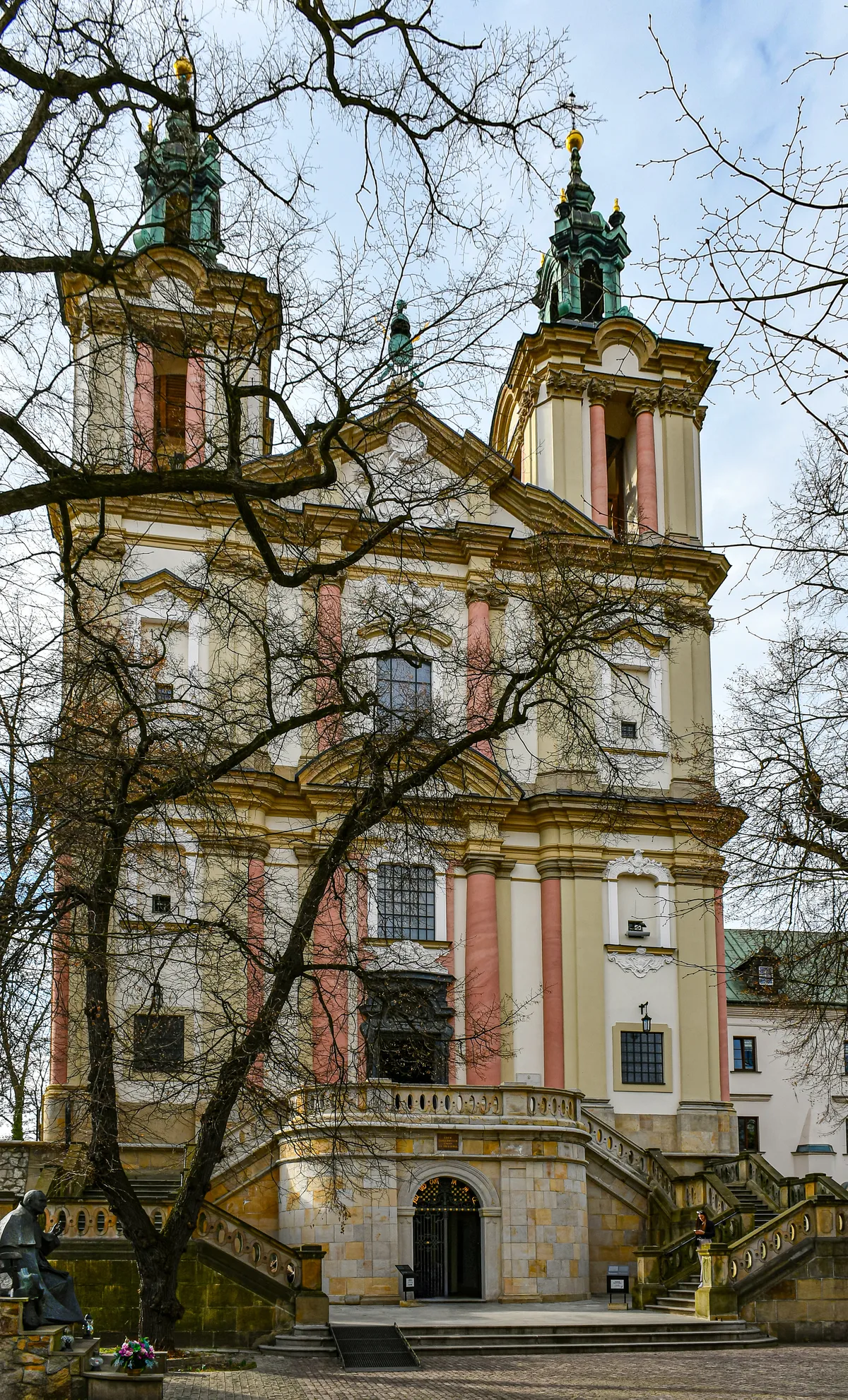
Church on the Rock (Kosciol na Skalce)
Saint Michael the Archangel and Saint Stanislaus the Bishop and Martyr Basilica, known as Skałka, is located on a small rock outcrop in Krakow. This site includes a Pauline monastery and marks where Bishop Stanislaus was killed in 1079 by order of King Bolesław II the Bold. The bishop’s death led to the king’s exile and the bishop’s later sainthood.
10 min
Plac Wolnica
Plac Wolnica is part of the original market square of Kazimierz, established in 1335. It was once as large as Krakow’s main market and served as a site for trade and local government, including a town hall. The name comes from the Latin Forum liberum, reflecting its history of free trade privileges granted in the late 18th century.
Corpus Christi Church (Kosciol Bozego Ciala)
This basilica was built between 1340 and the mid-15th century as a monastery church. It sits on a large plot that includes a monastic cemetery. In 1404, King Władysław II Jagiełło assigned it to the Canons Regular of the Lateran, a group he brought from Kłodzko.
Market Square
The current Market Square’s shape was finalized in projects from 1808 and 1844. On its northern side, adjacent to Kazimierz’s defensive walls, are buildings that formerly belonged to the Jewish hospital connected with the Kupa Synagogue.
Tempel Synagogue
The Tempel Synagogue in Kazimierz is both a place of worship and a center for Jewish cultural events, including concerts and meetings held especially during festivals.
Kupa Synagogue (Synagoga Kupa)
Built in the 17th century, the Kupa Synagogue served Krakow’s Jewish community after they were moved from the Old Town in 1495. It remains a venue for religious ceremonies and the annual Jewish Culture Festival.
Izaak Synagogue
Founded in 1644 and designed by Italian architect Francesco Olivierri, the Izaak Synagogue is named after its donor, Izaak Jakubowicz, a banker to King Ladislaus IV. It is an Orthodox Jewish synagogue located in the Kazimierz district.
High Synagogue
The High Synagogue, also called the Tall Synagogue, is a 16th-century inactive Orthodox Jewish synagogue in Kazimierz. It is the tallest synagogue in Krakow and a notable example of Late Renaissance architecture, with the prayer hall located on the upper floor.
Muzeum Krakowa - Stara Synagoga
The Old Synagogue, or Alta Shul in Yiddish, is the oldest surviving synagogue building in Poland. Situated in Kazimierz, it was a main religious and social center for Krakow’s Jewish community before World War II.
Wolf Popper Synagogue
Founded in the early 17th century by Wolf Popper, this synagogue was once one of the most magnificent in Kazimierz. Its entrance featured doors with animal motifs symbolizing virtues. Today, it functions as a bookshop and art gallery in the women’s section upstairs.
Rubinstein family house in Kazimierz
This house belonged to Helena Rubinstein’s family, Polish Jews living in Krakow during the Austro-Hungarian period. Helena was the oldest of eight daughters and related to philosopher Martin Buber and Ruth Rappaport's mother.
Remuh Synagogue
Dating from the 16th century, the Remuh Synagogue is the smallest historic synagogue in Kazimierz. Named after Rabbi Moses Isserles, known for his commentaries on Jewish law, it remains one of two active synagogues in Krakow.
Plac Bohaterow Getta
Also called Ghetto Heroes Square, this site was inside the Krakow ghetto from 1941 to 1943. It was a gathering place for Jews before transport to camps. The Pharmacy Under the Eagle, run by Tadeusz Pankiewicz, was located here and was the only non-Jewish residence in the ghetto.
Eagle Pharmacy - Museum of Krakow
Located at number 18 on Bohaterów Getta Square, this pharmacy was run by the Pankiewicz family before and during World War II. It was the only pharmacy inside the Krakow ghetto and served both Polish and Jewish residents, as well as charity groups.
Fabryka Emalia Oskara Schindlera
Oskar Schindler’s Enamel Factory in Krakow now houses two museums: the Museum of Contemporary Art and a branch of the Historical Museum of Krakow. The factory was notable as Schindler’s Deutsche Emailwarenfabrik and is featured in the film Schindler's List.
Ghetto Wall Fragment
A remaining section of the old Krakow ghetto wall is visible on the tour.
Church of St. Joseph
St. Joseph’s Church is a historic Catholic church in the Podgórze district, located on Podgórski Square on the northern side of the Krzemionki foothills in Krakow.
Meeting point
Meet us in the large kiss-and-ride car park
End point
Meet us in the large kiss-and-ride car park
Languages
Cancellation policy
- Cancel at least 24 hours before start for a full refund.
Additional info
More things to do in Krakow
- Krakow Pierogi Cooking Class: Mastering the Art of Polish Dumplings
- Wieliczka Salt Mine Guided Tour from Krakow with Hotel Pickup
- Wieliczka Salt Mine Guided Tour with Hotel Transfers in Krakow
- Wieliczka Salt Mine Guided Tour with Hotel Pick-up option in Krakow
- Wieliczka Salt Mine Guided Tour with Skip-the-Line Ticket in Krakow
- Auschwitz & Birkenau Guided Day Trip with Hotel Pickup from Krakow