
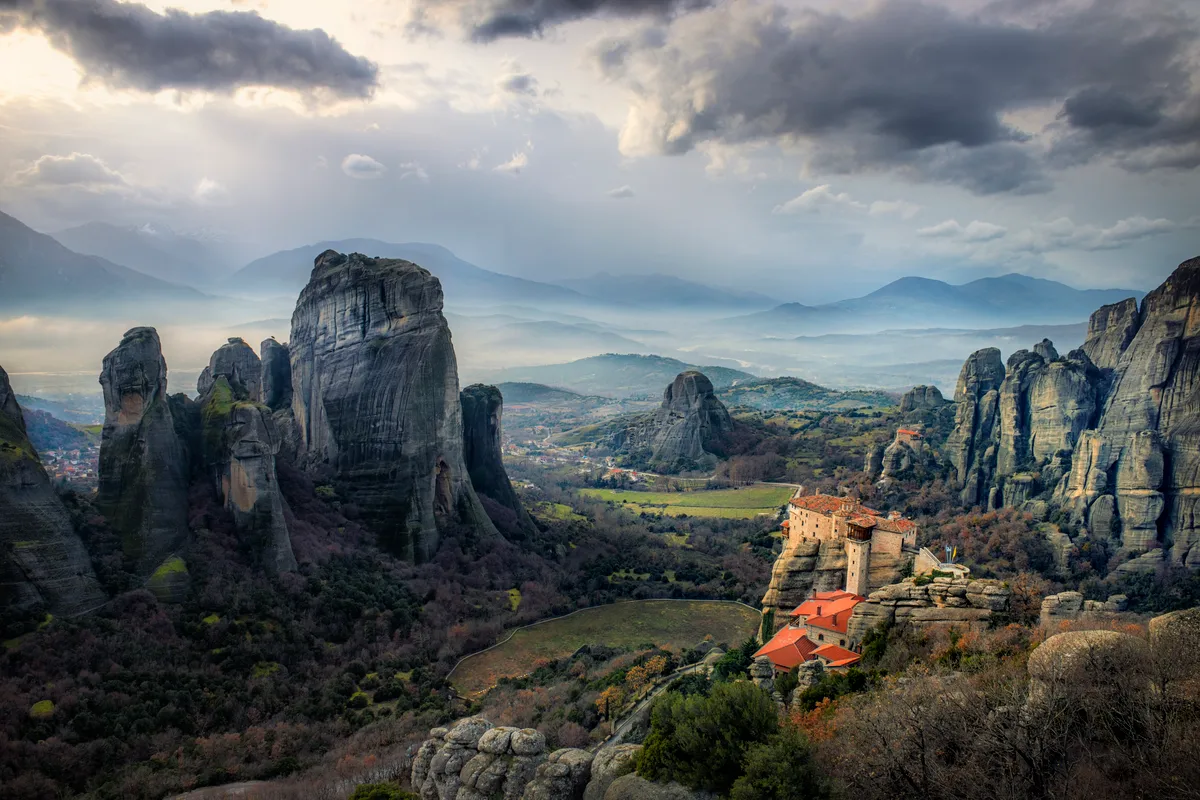
Meteora Sunset Small-Group Tour with Saint Stephen Monastery and Hermit Caves
by Visit Meteora Travel
Choose from 1 available option
How do you want to book?
Book on Viator Confirmed right away, but you pay full price.$81.06Overview
This small-group walking tour takes about four hours and focuses on Meteora's rock formations, monasteries, and hermit caves at sunset. The tour includes visits inside the Byzantine Church of the Virgin Mary and Saint Stephen Monastery. Participants also explore the hidden hermit caves where monks and hermits once lived, with explanations about their dwellings and lifestyle. The tour ends with views of the sunset over Meteora’s rock pillars. The guide provides commentary in English, while additional languages - Spanish, French, and German - are available through a free audio guide. Bottled water is included, and hotel pickup and drop-off are provided from Kalambaka or Kastraki. Food, drinks, gratuities, admission fees, and a state-licensed guide inside the monasteries are not included.
Highlights
What's included
What's not included
Itinerary
Meteora
Meteora covers a few square kilometers at the northwest tip of the Thessaly plain. It combines unique rock pillars and an ancient monastic community. It is a UNESCO World Heritage Site and a holy place. At the base of the rocks are the town of Kalambaka and the village of Kastraki.
120 min
Byzantine Church of the Assumption of Virgin Mary
This 11th-century church features Byzantine frescoes and walls built with relics from an ancient Greek temple dedicated to Apollo. Inside, older mosaic floors are visible under the current floor. The church remains active for local worship.
30 min
Agios Stefanos
Agios Stefanos is the most accessible monastery, reached via a small bridge without steps. It dates back to the 12th century, with significant renovations in the 15th and 16th centuries. It is suitable for visitors unable to climb steps who want to visit a Meteora monastery.
30 min
Great Meteoron Monastery
The oldest and largest monastery, built on a giant rock formation that seemed suspended in air. Founded by Saint Athanasios the Meteorite, it marks the start of organized monasticism at Meteora.
Holy Trinity Monastery
The Holy Trinity Monastery shares its history with the Great Meteoron Monastery, founded by Saint Athanasios the Meteorite. It is located on a rock formation known for its dramatic position.
Roussanou Monastery
Named after the first possible hermit resident, this monastery was founded at the end of the 16th century and decorated 30 years later. It sits lower than other monasteries, making it more accessible. It was damaged during World War II and became a convent in 1988.
Varlaam Monastery
The second largest monastery, opposite the Great Meteoron. Founded in the mid-14th century by Hosios Varlaam, its main church was built in 1541-42 and decorated in 1548. The wall paintings are attributed to the hagiographer Frago Catelano.
Languages
Cancellation policy
- Cancel at least 24 hours before start for a full refund.
Additional info
More things to do in Meteora
- Meteora All Monasteries Tour with Photo Stops
- Meteora Small Group Hiking Tour with Transfer and Visit to Ypapanti and Great Meteoro Monastery
- Majestic 4-Hour Sunset Meteora Tour with Local Guide, 6 Monasteries, Byzantine Church & Hermitages
- Meteora Panoramic Morning Small-Group Tour with Local Guide