
Mycenae, Epidaurus, Nafplio Full-Day Private Tour from Athens
by My Athens Transfers
Choose from 2 available options
How do you want to book?
Book on Viator Confirmed right away, but you pay full price.$438.62Overview
This full-day private tour takes you south of Athens to explore key sites in the Peloponnese. You will cross the Corinth Canal, a narrow waterway that separates the Peloponnese from mainland Greece, offering a view of its steep limestone walls and the vessels passing through. The tour begins at Mycenae, an ancient fortified city linked to King Agamemnon and the Mycenaean civilization, where you visit the archaeological site including the Lion Gate, Cyclopean walls, the Tomb of Clytemnestra, and the Treasury of Atreus. You also have time to visit the Archaeological Museum of Mycenae near the site entrance. Next, the tour continues to Epidaurus, where you will see the Ancient Theatre known for its excellent acoustics, the Sanctuary of Asclepius, and the Archaeological Museum of Epidaurus that displays temple reconstructions and artifacts from the area. Finally, the tour ends in the harbor town of Nafplio, with about 90 minutes of free time to have lunch, walk around its Venetian architecture, visit the Bourtzi water castle from the harbor, explore the Akronafplia fortress area, or climb up to Palamidi Castle, which stands on a 216-metre hill overlooking the Argolic Gulf. The tour lasts about 8 to 9 hours and includes private transportation, bottled water, on-board WiFi, air conditioning, optional traditional Greek lunch, and hotel or airport pickup and drop-off. A professional driver knowledgeable about history will provide commentary but will not accompany you inside archaeological sites. Entrance fees and a licensed tour guide are not included but can be arranged upon request.
Highlights
What's included
What's not included
Itinerary
Corinth Canal
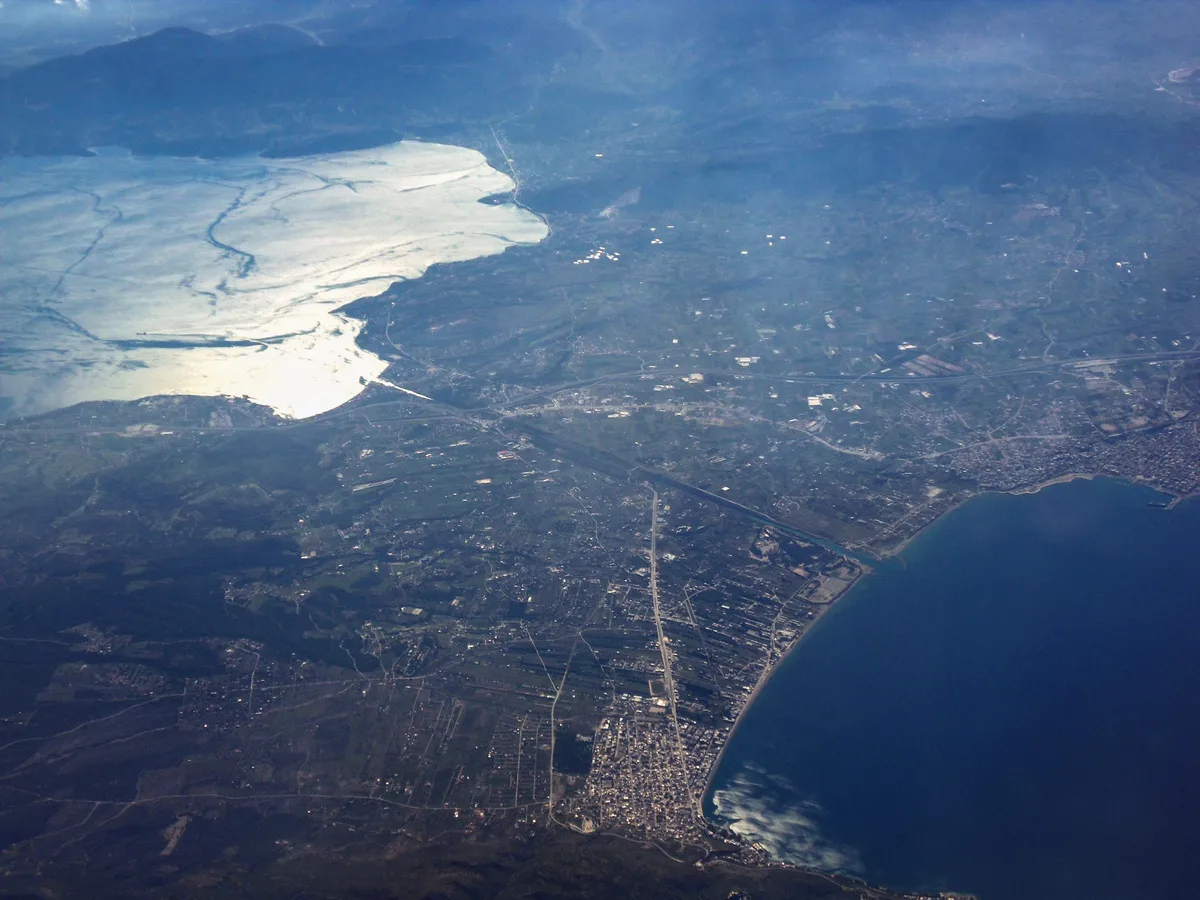
The Corinth Canal links the Gulf of Corinth in the Ionian Sea with the Saronic Gulf in the Aegean Sea. It is 6.4 kilometres (4 mi) long and only 21.4 metres (70 ft) wide at its base. The canal cuts through the Isthmus of Corinth at sea level without locks, separating the Peloponnese from the Greek mainland. From a high vantage point, the steep limestone walls can be seen while observing vessels navigating the narrow passage.
15 min
Mycenae
Mycenae is a fortified ancient city that was the seat of King Agamemnon and namesake of the Mycenaean civilization. The site includes the Tomb of Clytemnestra, the Lion Gate, and Cyclopean walls. Mycenae was a dominant military and cultural center between 1600 BC and 1100 BC, with a peak population around 30,000 and covering 32 hectares.
10 min
Archaeological Site Mycenae
The archaeological site covers the fortified acropolis and surrounding habitation and burial areas mainly to the west and southwest. Most monuments date from 1350 to 1200 BC. The acropolis is enclosed by large Cyclopean walls and accessed through the Lion Gate, which features two lion reliefs in a relieving triangle above the entrance.
40 min
Lion Gate
The Lion Gate is the main entrance to the Bronze Age citadel of Mycenae, built around 1250 BC. It is located on the northwest side of the acropolis and features a relief sculpture of two lions or lionesses in a heraldic pose above the doorway. This is the only surviving monumental sculpture from Mycenaean Greece and the largest prehistoric Aegean sculpture.
15 min
Archaeological Museum of Ancient Mycenae
Located at the entrance to the ancient site near the Lion Gate, this museum displays artifacts found in Mycenae, providing context to the ruins you visit.
30 min
Citadel and Treasury of Atreus
The Treasury of Atreus, also called the Tomb of Agamemnon, is a large beehive-shaped tomb built around 1250 BC on Panagitsa Hill. It has a massive stone lintel weighing 120 tons with dimensions of about 8.3 by 5.2 by 1.2 metres, the largest of its kind. The tomb was mentioned by Pausanias in the 2nd century AD and was discovered near the Acropolis shaft graves by Heinrich Schliemann in the 19th century.
15 min
Epidaurus Archaeological Museum
This museum in Epidaurus opened in 1909 and features temple reconstructions as well as columns and inscriptions from the archaeological site and surrounding area.
30 min
The Ancient Theatre of Epidaurus
The theatre in Epidaurus is located on the west side of Cynortion Mountain near Lygourio. It dates from the 4th century BC and is known for its excellent acoustics and preserved Hellenistic structure, including the theatron, orchestra, and skene. It remained unchanged during Roman times.
30 min
Sanctuary of Asklepios
The Temple of Asclepius in Epidaurus was the main sanctuary dedicated to the god of medicine. Built in the early 4th century BC, it was a significant healing center rivaling sites like Olympia and Delphi. The temple would have been closed by the late Roman Empire during the persecution of pagan worship.
15 min
Nafplio
You have about 90 minutes of free time in Nafplio, a seaport town with Venetian architecture, cobbled squares, and castles overlooking the Argolic Gulf. It served as Greece’s capital during the early 19th century. You can walk the colorful streets, enjoy lunch or coffee, and explore sights such as the Bourtzi water castle in the harbor, the Akronafplia fortress area, or climb Palamidi Castle on a 216-metre hill.
90 min
Bourtzi
Bourtzi is a Venetian water castle located in the middle of Nafplio’s harbor. From the harbor side, you can take photographs and view this historic fortress.
10 min
Akronafplia Fortress
The Akronafplia is the oldest part of Nafplio, once a standalone town before becoming part of the city's fortifications under the Venetians and Franks. It was later used as a prison and now hosts a hotel complex that offers views over the area.
Palamidi Castle
Palamidi is a fortress located east of the Acronauplia in Nafplio, built by the Venetians during their second occupation from 1686 to 1715. It stands on a hill 216 metres high and overlooks the Argolic Gulf, the town, and the surrounding area. There are 913 steps in the winding stair from the town to the fortress, but to reach the top there are over one thousand steps, with locals often saying there are 999 steps to the top of the castle.
30 min
Languages
Cancellation policy
- Cancel at least 24 hours before start for a full refund.
Additional info
More things to do in Athens
- Athens Small Group E-Bike Tour of Acropolis, Roman Odeon and City Center
- Athens Scenic Electric Bike Tour with Optional Acropolis Guided Visit
- Ancient Corinth, Epidaurus, Nafplio Full-Day Private Tour from Athens
- Private Tour of Apostle Paul's Footsteps in Ancient Corinth
- Athens Greek Food Experience with Tastings at 8-10 Locations (Max 8 People)
- Athens All Day Cruise to Agistri, Moni and Aegina with Lunch and Drinks