
Nikko Full-Day Private Walking Tour with Government-Licensed Guide
by Japan Guide Agency
Choose from 1 available option
How do you want to book?
Book on Viator Confirmed right away, but you pay full price.$293.32Overview
Nikko is a historic town in Japan known for its temples, shrines, and natural scenery along the Romantic Road. This private walking tour lasts about six hours and is led by a government-licensed, English-speaking guide. The tour starts with a morning meeting at Nikko Station (Tobu or JR lines). Visitors choose 3 to 4 sites from a list provided in advance to create a customized route. Sites available include Nikko Tosho-gu, the elaborate shrine where Tokugawa Ieyasu is buried, and the nearby Taiyuin mausoleum for the third Tokugawa shogun. You can also visit Rinno-ji Temple, Futarasan Shrine and its associated Shinkyo Bridge, or the Kanmangafuchi Abyss with its row of stone Jizo statues. Natural attractions such as Kegon Falls, Lake Chuzenji, Kirifuri Waterfall, Senjogahara Field, and the Akechidaira Observation Area are options as well. Other choices include the Nikko Botanical Garden, Tamozawa Imperial Villa Memorial Park, and the Kanaya Hotel History House. The guide helps organize the day to suit your interests, but transportation and entrance fees are not included. Lunch and personal expenses are also not covered. The tour operates on foot only, with no private transport provided. Travel time from Tokyo to Nikko exceeds two hours, so plan accordingly.
Highlights
What's included
What's not included
Itinerary
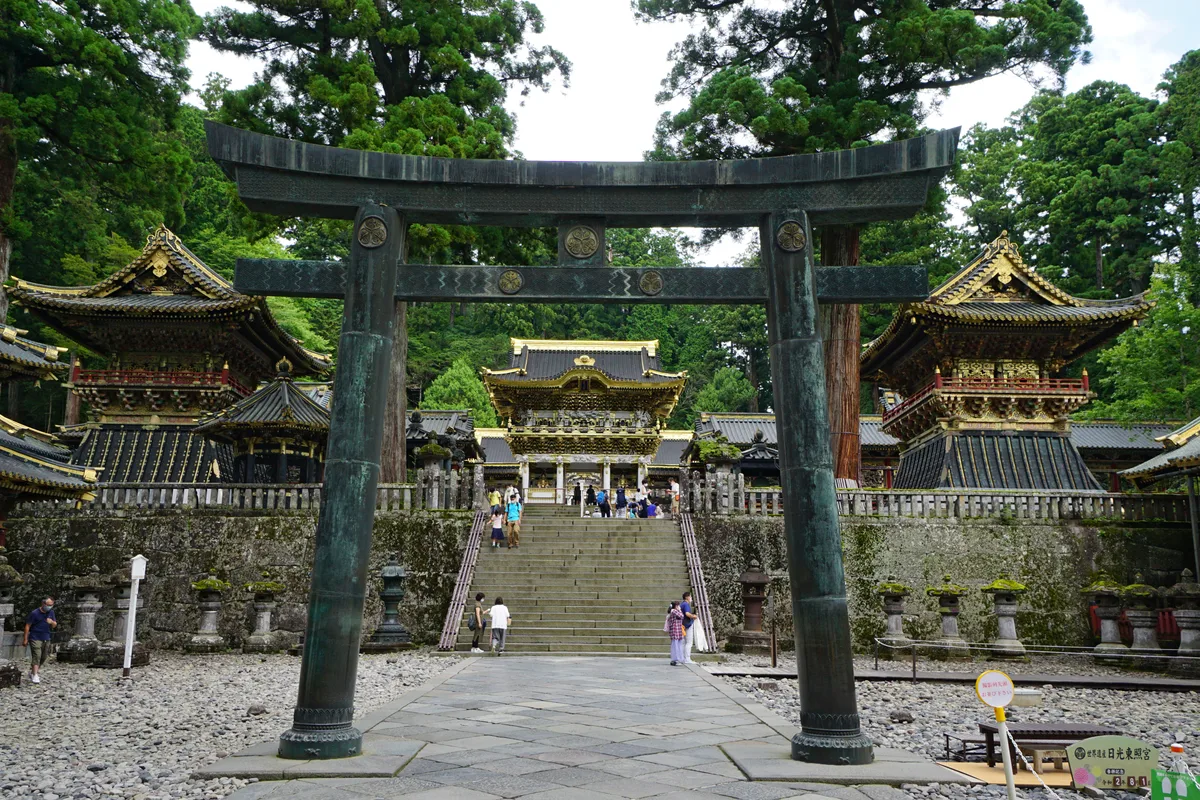
Nikko Tosho-gu
This shrine is the final resting place of Tokugawa Ieyasu, founder of the Tokugawa Shogunate. Most buildings date from the 17th century and include 55 structures with 8 national treasures and 34 listed buildings. Highlights are the detailed lacquered carvings, including the Sleeping Cat and the Three Monkeys symbolizing 'see no evil, hear no evil, speak no evil.' The visit typically takes about 30 minutes.
30 min
Kegon Falls
Kegon Falls is Nikko’s most famous waterfall, with water dropping 97 meters from Lake Chuzenji. Visitors can take a lift down to the base to hear the roar and see the water up close. The falls are striking year-round and especially notable in spring, early summer, and winter when ice forms. The visit lasts around 15 minutes.
15 min
Lake Chuzenji
This is the largest lake in Tochigi Prefecture, surrounded by 25 kilometers of natural scenery. The lake area was a popular summer resort for foreigners in the late 19th and early 20th centuries, with villas from French and Belgian embassies still present. Walking trails circle the lake and there is an optional excursion boat. Seasonal views include cherry blossoms, azaleas, and autumn leaves. The stop is about 15 minutes.
15 min
Senjogahara Field
Senjogahara Field is a marshland formed by the mythical battle between the gods of Mount Nantai and Mount Akagi. The area now hosts a variety of plants and wildlife. Visitors can explore the field on foot. The visit takes about 15 minutes.
15 min
Taiyuin
Taiyuin is the mausoleum of Tokugawa Iemitsu, the third shogun and grandson of Ieyasu. The complex resembles Nikko Tosho-gu but is more modest, reflecting Iemitsu’s respect for his grandfather. The mausoleum’s architecture and layout are notable. The visit lasts about 30 minutes.
30 min
Rinno-ji Temple
Rinno-ji is Nikko’s main temple, founded by Buddhist monk Shodo Shonin in the 8th century. Its main hall, Sanbutsudo, holds large gold-lacquered wooden statues of Amida, Senju-Kannon (thousand-armed), and Bato-Kannon (horse-headed). These represent Nikko’s three mountain deities. The Sanbutsudo completed a renovation in spring 2019. The visit is about 30 minutes.
30 min
Nikko Tamozawa Imperial Villa Memorial Park
This villa combines Edo and early Meiji architectural styles across 106 rooms. Built in 1899, it incorporates parts of a former Tokyo residence of the Tokugawa family. Later, it served as an Imperial Palace summer retreat. After neglect following World War II, it reopened to the public in 2000 following renovations. The visit takes 30 minutes.
30 min
Kanmangafuchi Abyss
Formed by an eruption of Mount Nantai, this short gorge near central Nikko features a riverside walking trail. The site is known for about 70 stone Jizo statues, called Bake Jizo or Hyaku Jizo, which watch over the river. The abyss is near the Nikko Botanical Garden but does not connect directly. The visit lasts 30 minutes.
30 min
Nikko Futarasan Shrine
Located next to Tosho-gu, Futarasan Shrine was founded in 782 by Shodo Shonin. It honors the deities of Nikko’s three sacred mountains: Mount Nantai, Mount Nyoho, and Mount Taro. The grounds are mostly free except for a small paid garden area with additional halls, a spring, and sacred trees. The Shinkyo Bridge, about one kilometer away, also belongs to the shrine. Visitors spend about 30 minutes here.
30 min
Nikko Botanical Garden
Owned by the University of Tokyo, this garden opened in 1902 to study alpine plants. It has extensive paths for walking and viewing labeled trees, plants, and shrubs. The garden offers views of Kanmangafuchi Abyss but has no direct access to it. The stop takes about 30 minutes.
30 min
Shinkyo Bridge
The Shinkyo Bridge marks the entrance to Nikko’s shrines and temples and belongs to Futarasan Shrine. Built in 1636, it is one of Japan’s three finest bridges alongside Iwakuni’s Kintaikyo and Saruhashi. It was closed to the public until 1973 and has been renovated since. Visitors can cross the bridge for a fee. The visit lasts around 30 minutes.
30 min
Kirifuri Waterfall
Kirifuri Waterfall is a 75-meter, two-tiered waterfall located below Kirifuri Highlands northeast of Nikko’s temples. The name means 'falling mist' due to the spray at the base. The waterfall contrasts with surrounding seasonal foliage, which changes color in autumn. Hiking to the base is no longer possible due to trail collapse. The visit takes about 15 minutes.
15 min
Kanaya Hotel History House
This historic building was the predecessor of the Kanaya Hotel, Japan’s oldest Western-style hotel. It is open to the public and located next to a bakery selling tickets. The hotel area became popular with foreign diplomats and business people after Japan’s isolation ended. The current Kanaya Hotel is about one kilometer away on a hill above the Shinkyo Bridge. The visit lasts 15 minutes.
15 min
Akechidaira Observation Area
Located near the top of Irohazaka Slope, Akechidaira Plateau offers wide views of a winding road and mountain scenery. A ropeway takes visitors to an observation platform with views of Kegon Falls and Lake Chuzenji. There is also a hiking trail connecting the lake to the observation area via the plateau. The stop lasts about 15 minutes.
15 min
Languages
Cancellation policy
- Cancel at least 24 hours before start for a full refund.