
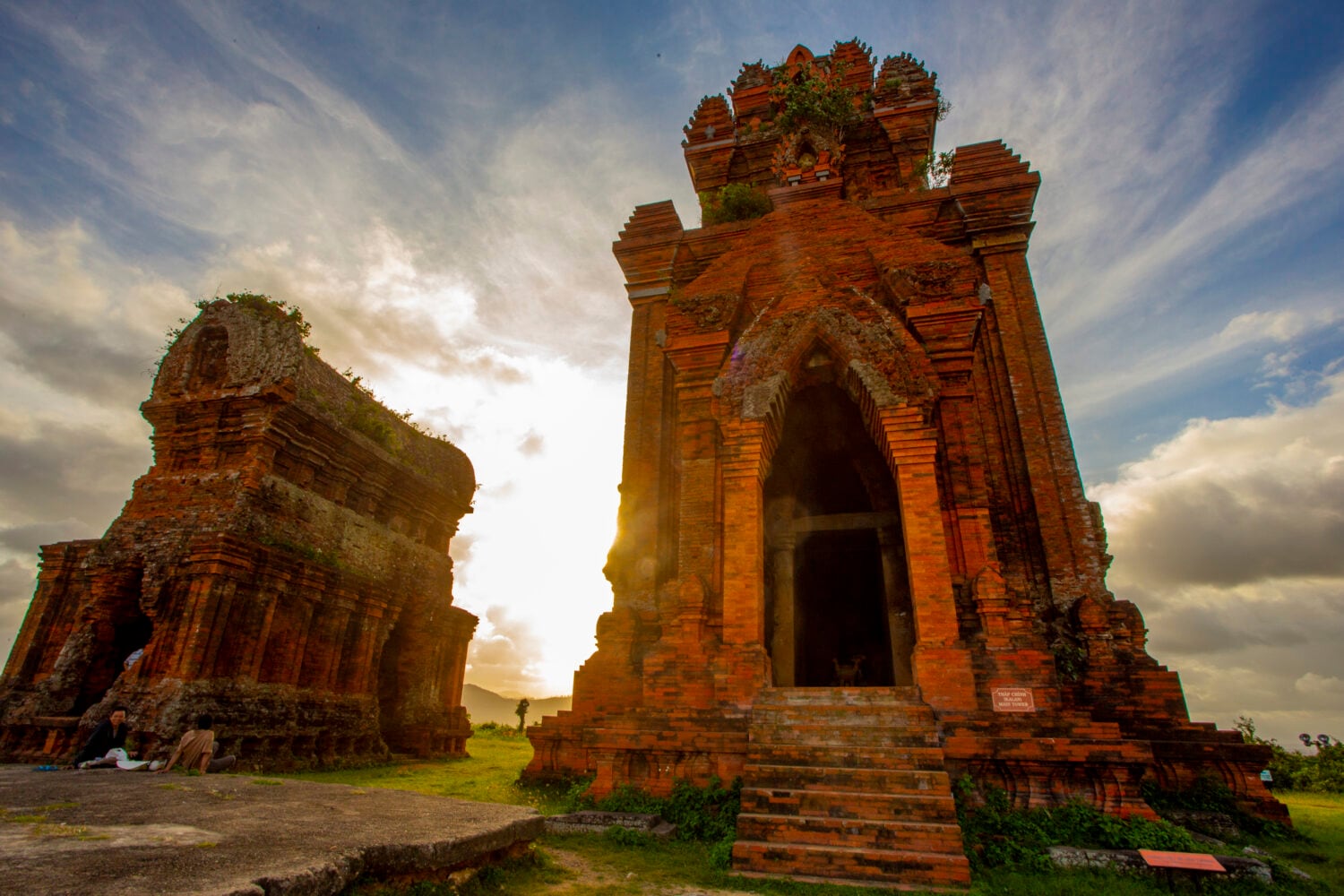


Quy Nhon Champa Culture Excursion Half-Day Private Tour
Choose an option
Prices for Sat 14 Nov
- Admission to attractions
- Vietnamese-speaking guide
- Lunch
- Bottled drinking water
- Transport
- Insurance provided by the operator
- Free round-trip transfers to and from hotel in Quy Nhon City Center
Not included: Other personal expenses; Tips and gratuities; Breakfast; Holiday surcharge: An extra charge of 200,000 VND/pax when traveling on 02/09/2026. Pay directly on-site
Ticket: Voucher type - Present your mobile voucher
Overview
Vijaya was centered on the lowland area along lower Kon River, in what is now the south of Bình Định Province. To the east of the plain and near the estuary of the river is a strategic and well-protected location for a port. This led to the rise of Cảng Thị Nại, one of the major ports of Champa. The river leading up into the highlands to the west was important for the trade with highland peoples supplying Champa with luxury goods such as eaglewood for export. Vijaya’s geography was also important for its agriculture. With one of the larger rivers of Champa, its soils were more fertile than that of many other places. This allowed for a relatively large concentration of people near the centre of Vijaya, which resulted in a relatively large number of temples. Vijaya’s architecture distinguishes it from other Champa centers, because it used a combination of stone and brick elements, while most other Cham structures only used bricks. This suggests some influence from Cambodian Angkor. It also points to the relative abundance of labour in Vijaya compared to other Champa centres of powers, because processing stones for construction was more labour-intensive than the production of bricks. Vijaya’s style of architecture seems to have been dominant throughout Champa for some time, given the later classification of the architecture from the period between the 12th and 14th centuries as the “Binh Dinh style”
Highlights
What's included
What's not included
Cancellation policy
- Free cancellation with 24 hours' notice.
Additional info
More things to do in Qui Nhon
- Half-day Private SUP Tour in Quy Nhon
- Quy Nhon Day Tour to Explore Ky Co - Eo Gio - Hon Kho Island
- Phu Yen Day Tour from Quy Nhon: Mang Lang Church, Ganh Da Dia, Bai Xep
- Phu Yen Day Tour From Quy Nhon: Mang Lang Church, Ghenh Da Dia