
Saint John 2.5-Hour Historic Walking Tour with Pete
by Historic Walking Tour by Peter Ferguson
Choose from 1 available option
How do you want to book?
Book on Viator Confirmed right away, but you pay full price.$64.68Overview
Saint John, New Brunswick, is the only city on the Bay of Fundy, famous for the highest tides in the world. This 2.5-hour walking tour begins at the Area 506 Waterfront Container Village entrance. The group follows Water Street toward Market Square, then uses the indoor pedway system to avoid climbing King Street, known as Canada’s steepest main street. The route is mostly flat with a downhill section near the end. During the walk, the guide shares historical facts covering the city's development from 1783 to today, using rare photo copies to illustrate points. The tour stops at several locations including Furlongs liquor store on Water Street and Market Square, where the Loyalist Landing site, the Great Fire’s origin, and the Prince Charles and Lady Diana walkabout are located. Inside Market Square, the guide discusses the Marco Polo sailing ship model. At city hall, stories about Pete's Pub and its 35 years in sports and entertainment are told. The Saint John City Market, the oldest continuously operating market in Canada, is visited with time to shop. On Charlotte Street, large murals of notable Saint John residents are shown in an alley. King’s Square park, established in 1785, contains items such as a mass of molten metal from the Great Fire and statues of William Young and Charles Gorman, plus the King Edward vii Bandstand. Across the street is the Irving Oil Headquarters, with the history of the Irving family starting in 1899. The Imperial Theatre history dates back to 1913 with details of its chandeliers and features. Nearby, the Admiral Beatty building, once a luxury hotel opened in 1925, is highlighted including Amelia Earhart's visit. Trinity Church, a Loyalist church, is described with its four main artifacts. Across Germain Street is the Union Club, a business club founded in 1884, with its historical background explained. The tour continues along Princess Street where a modern building blends with preserved architecture and the historic Ritchie building is discussed. Prince William Street, formerly known as the Wall Street of Canada, features many main buildings like Chubb's Corner with carved stone heads, old City Hall, the old post office, the Jarvis building, Bank of New Brunswick Palatine building, and the Seamen’s Mission. The Partridge Island mural across from the mission illustrates immigration and quarantine history, focusing on Irish immigrants during the Potato Famine. The Three Sisters Lamp in St. Patrick Park is the last major stop before the tour ends at the Marco Polo cruise terminal and Area 506 Waterfront Container Village. The guide explains the history of Saint John’s cruise industry and its beginnings. The tour is guided on foot, includes all historical commentary and photo materials, and excludes lunch.
Highlights
What's included
What's not included
Itinerary
Water Street stop
The tour pauses at Furlongs liquor store on Water Street while heading toward Market Square.
10 min
Market Square area
From outside Market Square, the guide points out the Loyalist Landing site from 1783, the start location of Saint John's Great Fire, and the Prince Charles and Lady Diana walkabout. Inside Market Square, the history of the Marco Polo sailing ship model is discussed.
15 min
City Hall
At city hall, the guide shares the background of Pete's Pub, owned by the guide, covering 35 years of sports and entertainment stories.
15 min
Saint John City Market
The guide describes the architectural and historical aspects of the Saint John City Market, the oldest continuously operating market in Canada, with extra time given for shopping.
10 min
Charlotte Street murals
On Charlotte Street, the guide shows large murals of significant Saint John figures, located in an alley away from the main street.
10 min
King's Square
The guide explains the main features of King's Square park, established in 1785, including a mass of molten metal from the Great Fire, statues of William Young and Charles Gorman, and the King Edward vii Bandstand.
10 min
Irving Oil Headquarters
Opposite King's Square on King Square South Street, the guide recounts the history of the Irving family in New Brunswick starting with K.C. Irving in 1899.
5 min
Imperial Theatre
The guide provides the history of the Imperial Theatre, which opened as a vaudeville venue in 1913, including details about its chandeliers and other interior features.
10 min
Admiral Beatty building
Next to the Imperial Theatre on King Square South, the guide covers the history of the Admiral Beatty building, originally a luxury hotel opened in 1925, noting famous visitors such as Amelia Earhart.
10 min
Trinity Church
The guide describes the Loyalist Trinity Church, focusing on its architectural features and the four main artifacts it holds.
15 min
Germain Street and Union Club
After leaving Trinity Church, the tour continues on Germain Street, named after Lord George Germain. Opposite the church is the Union Club, a business club founded in 1884, whose history is explained.
5 min
Princess Street corner
At Germain and Princess Streets, the guide points out a newer building designed to fit preservation standards and the historic Ritchie building, explaining its features.
10 min
Prince William Street
After descending Princess Street to Prince William Street, the guide discusses key buildings such as Chubb's Corner with carved stone heads, old City Hall, the old post office, the Jarvis building, Bank of New Brunswick Palatine building, and the Seamen's Mission. The Partridge Island mural across from the mission shows the island's immigration and quarantine history, highlighting Irish immigrants during the Potato Famine.
15 min
Three Sisters Lamp in St. Patrick Park
At St. Patrick Park, the guide explains the origin of the Three Sisters Lamps and how they helped save lives at the foot of Prince William Street.
5 min
Marco Polo cruise terminal and Area 506 Waterfront Container Village
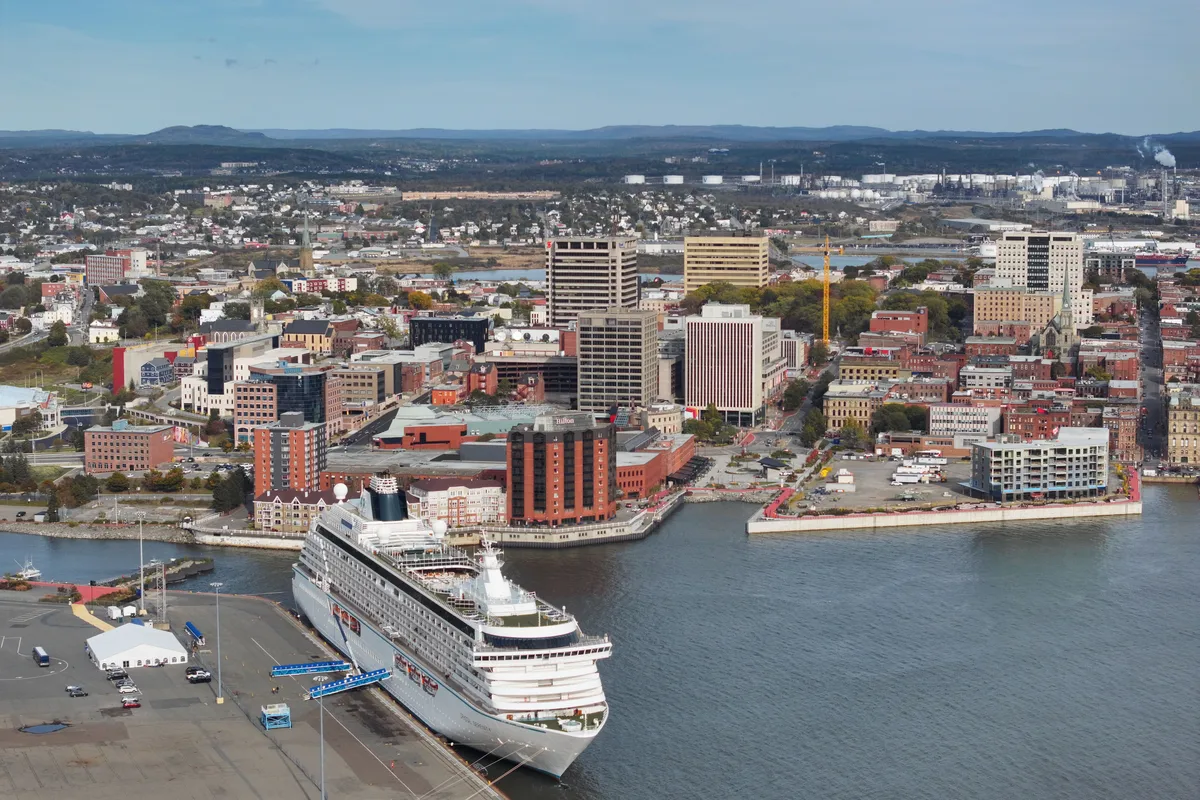
The tour ends at the Marco Polo cruise terminal and Area 506 Waterfront Container Village, where the guide tells the history of Saint John's cruise industry and how it began.
5 min
Meeting point
Go to the corner of Duke and Water, beside the Marco Polo cruise terminal
End point
Go to the corner of Duke and Water, beside the Marco Polo cruise terminal
Languages
Cancellation policy
- Cancel at least 24 hours before start for a full refund.