


2-Day Tour of Huangshan and Hongcun
Choose an option
Prices for Sat 14 Nov
- Chinese-speaking guide
- Transportation: Full tour with licensed and regulated tour vehicles (guaranteed one seat per person), seats are randomly assigned and not prioritized.
- Tickets: Includes admission tickets to Huangshan Mountain, Hongcun Ancient Village, and other scenic spots.
- Accommodation: 1 night in a boutique 4-diamond hotel (reference hotel: LICHENG Courtyard or equivalent); All accommodations offer air conditioning, television, and private bathroom. Natural single rooms are not available.
- Meals: 1 breakfast, 0 main meals. Hotel includes one daily breakfast (non-refundable if not used).
Not included: All meals included; Huangshan scenic shuttle (38/person round trip), Huangshan cable car (170/person round trip) (mandatory consumption); Personal Accident Travel Insurance; Single Room Supplement: If a single room supplement is incurred, the guest needs to pay the difference on the spot or stay in a triple room (triple rooms are usually family rooms or standard rooms with an extra bed).; Any costs other than those included in "Included Fees"
Ticket: Show e-voucher
Overview
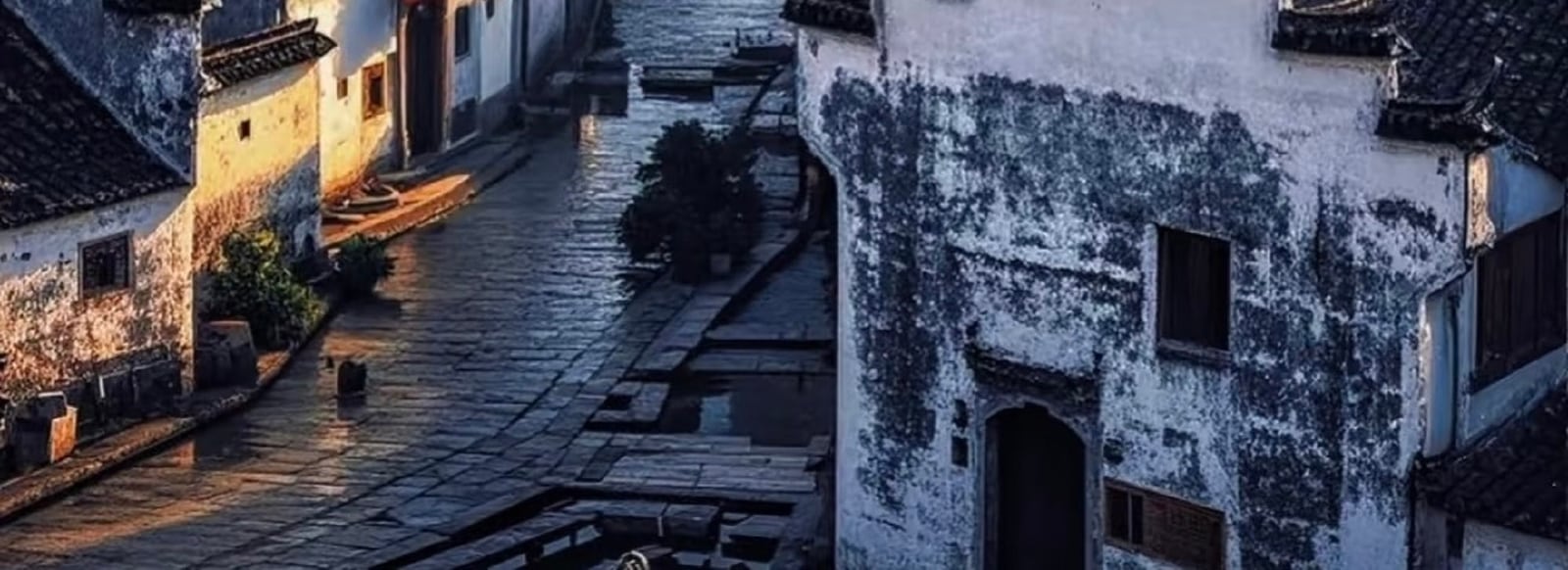
Day 1: Pick up at the station, visit Hongcun in the afternoon, stay in the city. Explore Tunxi Old Street/Liyang Water Street on your own. Day 2: One-day tour of Huangshan, return trip. Huangshan, located in Huangshan City, Anhui Province, was originally named Yishan. It was renamed Huangshan during the Tang Dynasty, meaning "Mountain of the Yellow Emperor." Huangshan is a World Natural and Cultural Heritage site, a World Geopark, one of China's top ten scenic spots, and a national 5A-level tourist attraction. The Huangshan scenic area covers an area of 160.6 square kilometers, extending from Huangshi in the east to Xiaolingjiao in the west, from Erlong Bridge in the north to Tangkou Town in the south. It is divided into nine management areas: Hot Spring, Yungou, Yuping, Beihai, Songgu, Diaoqiao, Fuxi, Yanghu, and Fuguo, including over 200 large and small scenic spots. Huangshan is renowned worldwide for its "five wonders": strange pines, grotesque rocks, sea of clouds, hot springs, and winter snow, earning it the title of "the most marvelous mountain under heaven." The saying, "One returns from the Five Great Mountains and sees no other mountains, but one returns from Huangshan and sees no other Five Great Mountains," is the best evaluation of Huangshan. Hongcun is located in Hongcun Town, Yi County, Anhui Province, 11 kilometers from Yi County. It is situated on the southwestern foothills of Huangshan, with geographical coordinates of 117°38′ East longitude and 30°11′ North latitude. Historical Evolution: Founded in the first year of Shaoxing in the Southern Song Dynasty (1131 AD), it was originally called "Hongcun." It was renamed Hongcun during the Qianlong period of the Qing Dynasty and has a history of over 800 years. Village Layout: The geographical layout of Hongcun resembles an "ox." Leigang Mountain is like the "ox head," ancient trees are like "horns," the ancient buildings in the village form the "ox body," the ponds and lakes are like the "ox stomach" and "ox belly," the artificial water system is like the "ox intestines," and the four wooden bridges in the village are the "ox legs." The entire village is like a "reclining ox." Architectural Style: It is one of the representatives of traditional Huizhou architecture. The architectural style is simple and unadorned, with neatly arranged white walls and black tiles, upturned eaves, and elegant and antique interior furnishings. It preserves 137 ancient buildings from the Ming and Qing dynasties.
Highlights
What's included
What's not included
Cancellation policy
- Conditional cancellation - a refund is not guaranteed.