
Lisbon 2-Hour Traditional Boats Sunset Cruise with White Wine
by Nosso Tejo
Choose from 1 available option
How do you want to book?
Book on Viator Confirmed right away, but you pay full price.€70Overview
This 2-hour boat cruise on the Tagus River focuses on Lisbon's history as a maritime city. The tour departs from the renovated "Sul e Sueste" boat station near Commerce Square. Passengers will see key landmarks including Commerce Square, São Jorge Castle, Alfama neighborhood, National Pantheon, Santa Apolónia Station, Cacilhas, Christ the King statue, 25th of April Bridge, Belém Tower, Discoveries Monument, MAAT museum, and Palace of Ajuda. The cruise takes place on one of the few remaining traditional Lisbon boats. White wine from the Setúbal region is served freely throughout the trip. The atmosphere is complemented by Fado music playing during the ride, along with stories shared by the sailors about the boats and the city. The tour covers the city center and riverside sights as the sun sets, changing the colors of the sky. This is a shared sightseeing tour lasting about two hours. Transportation to and from the boat station is not included. Guests are advised to arrive 15 minutes before departure. Children must be accompanied by an adult.
Highlights
What's included
What's not included
Itinerary
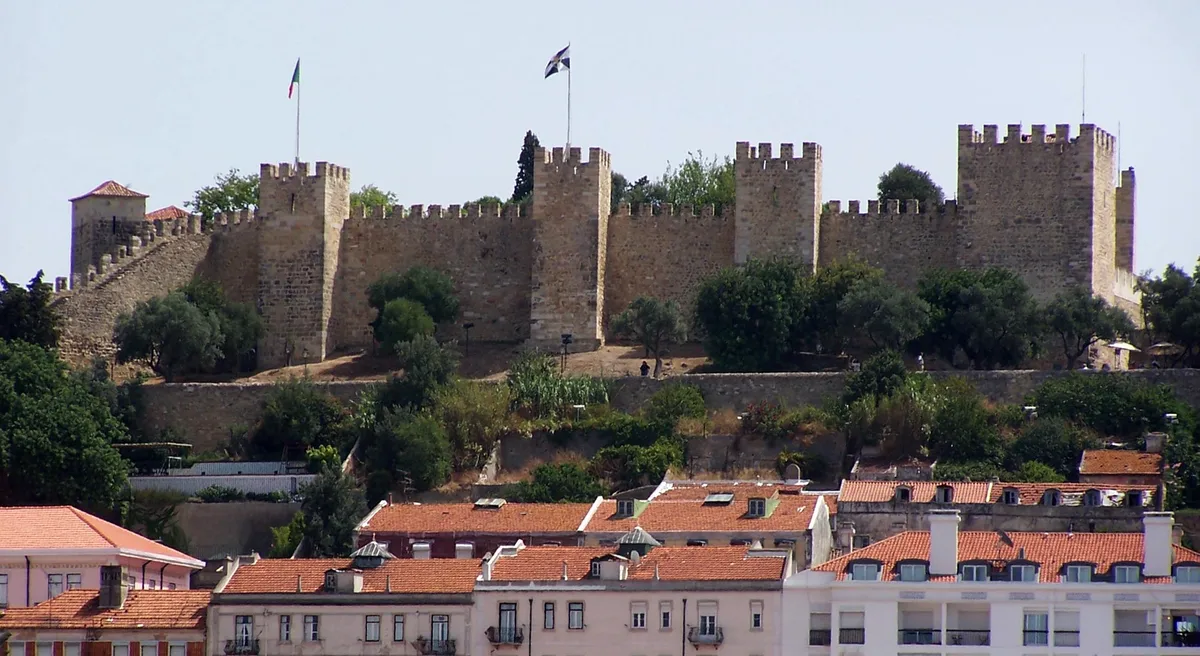
Castelo De Sao Jorge
São Jorge Castle is a historic fortress in Lisbon’s Santa Maria Maior district. The castle hill has been occupied since at least the 8th century BC, with fortifications dating back to the 1st century BC. It has been used by Phoenicians, Carthaginians, Romans, Moors, and Portuguese since the 12th century. Over time it served as a royal palace, military barracks, and archive, and today functions as a national monument and museum.
Jeronimos Monastery
The Jerónimos Monastery, near the Tagus River in Belém, was once home to the Order of Saint Jerome. Secularized in 1833, it became property of a charitable institution. The monastery is a leading example of Portuguese late Gothic Manueline architecture and was declared a UNESCO World Heritage Site in 1983 along with the nearby Tower of Belém.
Alfama
Alfama is Lisbon’s oldest neighborhood, located on the slope between São Jorge Castle and the Tagus River. Its name derives from the Arabic word for hot springs or baths. The district includes several parishes and features many historic sites, as well as numerous Fado bars and restaurants.
Panteao Nacional
The National Pantheon, originally the Church of Santa Engrácia built in the 17th century, is located in the Alfama district. Converted in the 20th century, it serves as a burial site for important Portuguese figures and lies near the Monastery of São Vicente de Fora.
Padrao Dos Descobrimentos
The Monument of the Discoveries stands on the northern bank of the Tagus River in the Santa Maria de Belém parish. It marks the departure point of ships exploring India and the Orient and celebrates Portugal’s Age of Discovery during the 15th and 16th centuries.
Lisbon Cathedral
Lisbon Cathedral, also called Sé de Lisboa, is the city’s oldest church and the seat of the Patriarchate of Lisbon. Built in 1147, it has been repaired and altered several times after earthquakes. The building combines multiple architectural styles and has been a National Monument since 1910.
Ponte 25 de Abril
The 25th of April Bridge is a suspension bridge linking Lisbon to Almada across the Tagus River. Opened on August 6, 1966, it was built by the American Bridge Company and is similar in color to San Francisco’s Golden Gate Bridge. The bridge is 2,277 metres (7,470 ft) long and carries six car lanes on the upper deck and a double track electrified railway at 25 kV AC on the lower deck.
Torre de Belem
Belém Tower is a 16th-century fortification in Lisbon that functioned as a ceremonial gateway and embarkation point for Portuguese explorers. Constructed from lioz limestone in the Manueline style, it includes a bastion and a 30-metre (98.4 ft), four-storey tower. It has been a UNESCO World Heritage Site since 1983.
Palacio Nacional da Ajuda
The Palace of Ajuda is a neoclassical building in Lisbon’s Ajuda parish. Constructed on the site of a temporary royal residence built after the 1755 earthquake, it was initially designed with Baroque-Rococo elements and later completed in a neoclassical style by different architects.
MAAT - Museu de Arte, Arquitetura e Tecnologia
MAAT is a museum in Lisbon focused on art, architecture, and technology. Located on the Tagus River’s west side, it connects a new building designed by Amanda Levete Architects with the old Tejo Power Station, an industrial architecture landmark from the early 20th century.
Meeting point
Find the boat station "Sul e Sueste" next to Commerce Square. Meeting point: inside the boat station, in front of ticket office #8.
End point
Find the boat station "Sul e Sueste" next to Commerce Square. Meeting point: inside the boat station, in front of ticket office #8.
Languages
Cancellation policy
- Cancel at least 24 hours before start for a full refund.
Additional info
More things to do in Lisbon
- Private Full-Day Wine Tour from Lisbon with Tastings and Visits to Livramento Market and Arrábida
- Lisbon Hop-On Hop-Off Bus, Tram, and River Cruise Ticket for 72 or 96 Hours
- Porto Private Personalized Full-Day Journey from Lisbon
- Lisbon and Sintra Private Tour including Pena Palace, Jeronimos Monastery and Cabo da Roca
- Sintra Day Trip from Lisbon with Entrance Tickets to Quinta da Regaleira and Pena Palace Terraces
- Lisbon 4-Hour Private Layover Tour