
Charleston Highlights: History, Culture & Architecture including Nathaniel Russell House & Battery
by Charleston Sole Walking Tours
Choose from 1 available option
How do you want to book?
Book on Viator Confirmed right away, but you pay full price.$50Overview
This two-hour walking tour begins at the Old Exchange & Provost Dungeon, a historic building dating to 1771 where the Declaration of Independence was read in 1776 and other important events took place. After a 15-minute introduction, the tour proceeds to Rainbow Row, the longest series of attached Georgian row houses in the United States, originally mariner's stores from the 18th and 19th centuries and restored with bright colors in the 1930s. The guide then stops outside the Old Slave Mart Museum to explain Charleston’s role in the interstate slave trade; entry to the museum is not included. Next, the group visits the French Huguenot Church, a Gothic Revival building from 1845 that remains one of the few practicing Huguenot congregations in the country. The tour continues to Dock Street Theater, restored in 1937 on the site of the first theater in the British colonies; entry depends on availability. A brief stop is made at Charleston City Hall, built in 1801 and part of the "Four Corners of Law," where visitors may enter the council chamber on weekdays. Afterwards, the tour visits St. Michael's Church, the oldest house of worship in Charleston dating to 1761, featuring original woodwork and Tiffany stained glass windows; entry depends on availability. The churchyard contains graves of two signers of the U.S. Constitution. The group then enters the garden of the Nathaniel Russell House, a Federal-style townhouse built in 1808 by a wealthy Rhode Island merchant. The tour ends at the Edmondston-Alston House on the High Battery wall, where participants view waterfront mansions and Fort Sumter in the distance. This house has been owned by the same family since 1838 and was a vantage point during the start of the Civil War. A guide accompanies the group throughout the approximately two-hour walk. The tour covers Charleston’s history, culture, and architecture by visiting significant buildings, churches, and historic sites in chronological and geographical order.
Highlights
What's included
Itinerary
Old Exchange & Provost Dungeon
The tour starts at this historic South Carolina building from about 1771. Significant events include the 1776 reading of the Declaration of Independence here, use as a British prison for nearly two years during the American Revolution, South Carolina’s ratification of the US Constitution in 1788, and a week-long visit from George Washington in 1791.
15 min
Rainbow Row
This stop showcases the longest row of attached Georgian-style row houses in the United States. These buildings were mariner’s stores during the 18th and 19th centuries and were restored in the 1930s with a Caribbean-inspired bright color scheme.
5 min
Old Slave Mart Museum
Known in the 1850s as Ryan’s Slave Mart, this building was used for auctioning enslaved people as part of the interstate slave trade. The guide explains Charleston’s role in the slave trade here. Visitors do not enter the building, which is operated as a museum by the City of Charleston.
10 min
French Huguenot Church
This Gothic Revival church was built in 1845 and is home to one of the few remaining practicing French Protestant (Huguenot) congregations in the United States.
5 min
Dock Street Theater
Built on the site of the first theater in the British colonies, this theater was restored in 1937 from the old Planter’s Hotel dating to 1809. It is operated by the Charleston Stage company, the largest professional theater in South Carolina, which hosts about 120 performances yearly. Entry depends on availability.
10 min
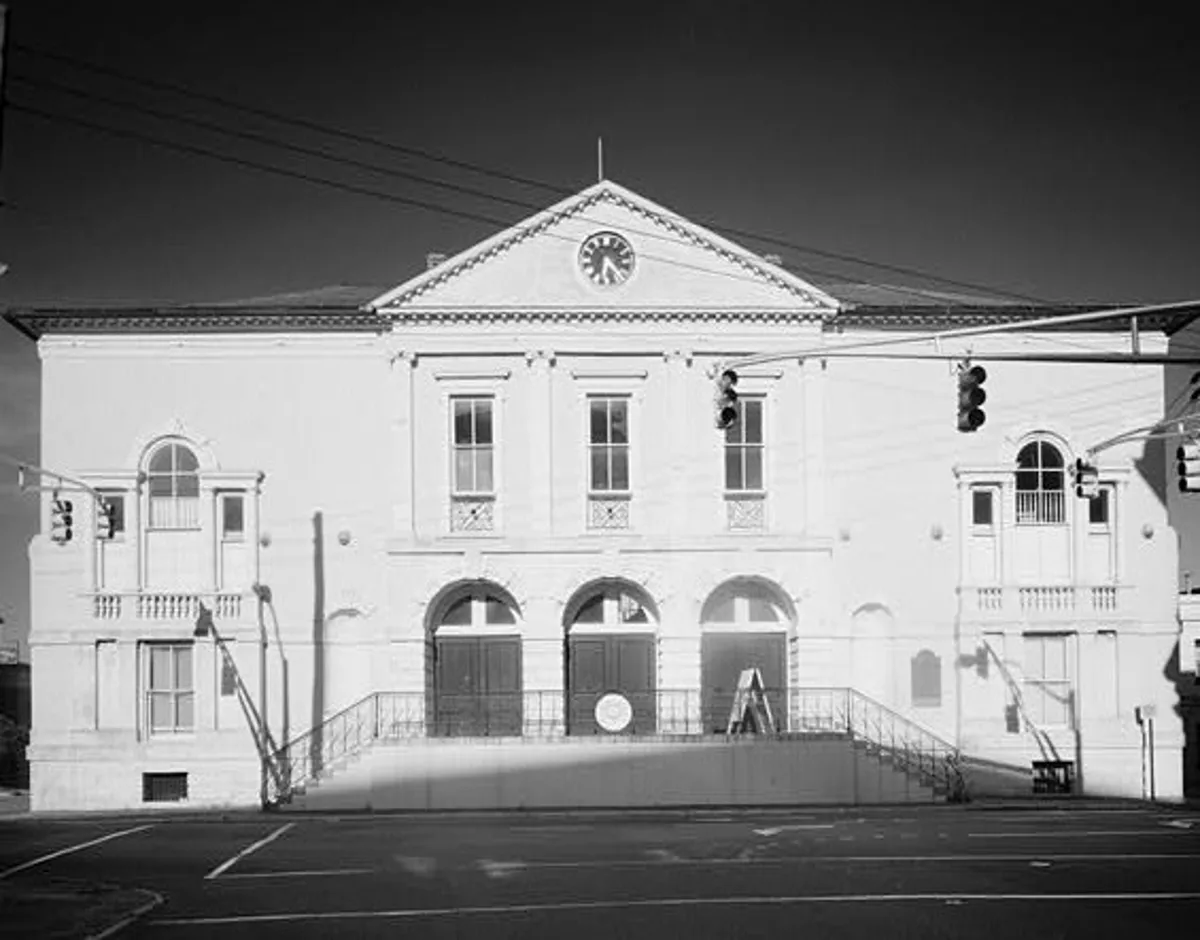
Charleston City Hall
Located at one of the 'Four Corners of Law,' this building was constructed in 1801 initially as a bank and has been City Hall since 1818. It is among the oldest continuously operating city halls in the country. Visitors can enter the council chamber and see its collection on weekdays at no cost.
2 min
St. Michael's Church
The oldest house of worship in Charleston, built around 1761. The church contains much original woodwork and Tiffany stained glass windows. John Rutledge and Charles Cotesworth Pinckney, signers of the US Constitution, are buried in the churchyard. Entry depends on availability.
15 min
Nathaniel Russell House
The tour enters the garden of this Federal-style townhouse built in 1808 by Nathaniel Russell, a wealthy merchant originally from Rhode Island involved in shipping.
10 min
Edmondston-Alston House
Located on the High Battery wall, this stop offers views of waterfront mansions and Fort Sumter. The house has been owned by the same family since 1838 and was a lookout point during the Civil War when General Beauregard watched the bombardment of Fort Sumter with others.
10 min
Meeting point
We meet on the north side of the building. There is a tree and two park benches next to a Gillon Street (cobblestone).
End point
We meet on the north side of the building. There is a tree and two park benches next to a Gillon Street (cobblestone).
Languages
Cancellation policy
- Cancel at least 24 hours before start for a full refund.
Additional info
More things to do in Charleston
- Charleston Ghosts of Liberty Guided Walking Tour
- Charleston and Mount Pleasant Outer Banks Film Locations Private 3-Hour Tour with Bottled Water
- Charleston Brunch Food Tour on Upper King Street: Biscuits, Shrimps, Grits and More
- Charleston 40-Minute Haunted Evening Horse and Carriage Tour
- Charleston Chicora 2 Hours Walking Tour
- Charleston 90-Minute City Bus Tour Including The Citadel, Old City Market, Battery Photo Stop and Powder Museum