
Colombo Tuk Tuk City Tour with Entry Fees and Food Included
by Capital Tour by Tuk Tuk
Choose from 1 available option
How do you want to book?
Book on Viator Confirmed right away, but you pay full price.$59.52Overview
This four-hour tuk tuk city tour of Colombo includes entry fees and food. The tour begins with a visit to the Sri Kailasanathar Swami Devasthanam Kovil in Pettah, a historic Hindu temple known for its Dravidian architecture and colorful gopuram, where visitors spend about fifteen minutes. Next, the tour proceeds to the Lotus Tower, a 350-meter-tall structure used for communication and observation. The route continues to Colombo Fort Railway Station, the main rail hub, and explores the Colombo Fort district, known for its colonial-era buildings and commercial significance. The tour passes the 29-meter Galbokka Lighthouse, built in 1952, and the Old Parliament Building, a neoclassical structure overlooking Galle Face Green, a seaside promenade with a history of British colonial leisure activities. Visitors also see the bustling Pettah neighborhood, including its vegetable market, and the red-and-white striped Jami Ul-Alfar Mosque. Other stops include the Dutch-era Wolvendaal Church, the Old General Post Office, the President’s House, the Colombo Economic History Museum, Cargills Department Store housed in a colonial building, the Grand Oriental Hotel, the Old Town Hall with its small museum, Kayman’s Gate Belltower, the Colombo Maritime Museum, the Port City Colombo development site, the Cenotaph War Memorial, Independence Memorial Hall with its cultural exhibits, and Viharamahadevi Park, which contains the city’s public library and is the site of annual elephant processions. The tour includes bottled water, all entry fees and taxes, lunch or dinner at a local restaurant, and an umbrella for comfort. Local guides provide commentary and assistance throughout the ride. Traveling by tuk tuk allows access to narrow streets and close views of the city’s varied architecture and markets.
Highlights
What's included
Itinerary
Temple Of Sri Kailawasanathan Swami Devasthanam Kovil
Sri Kailasanathar Swami Devasthanam is among Colombo’s oldest Hindu temples, dedicated to Lord Shiva. It features Dravidian-style architecture with colorful sculptures and detailed carvings. The temple, over two centuries old, is a spiritual center for the Tamil Hindu community. It has a tall gopuram decorated with deities from Hindu mythology. Devotees come for blessings, rituals, and festivals like Maha Shivaratri. Daily poojas are held, attracting worshippers and visitors. It is situated in the busy Pettah area of Colombo.
15 min
Lotus Tower Colombo
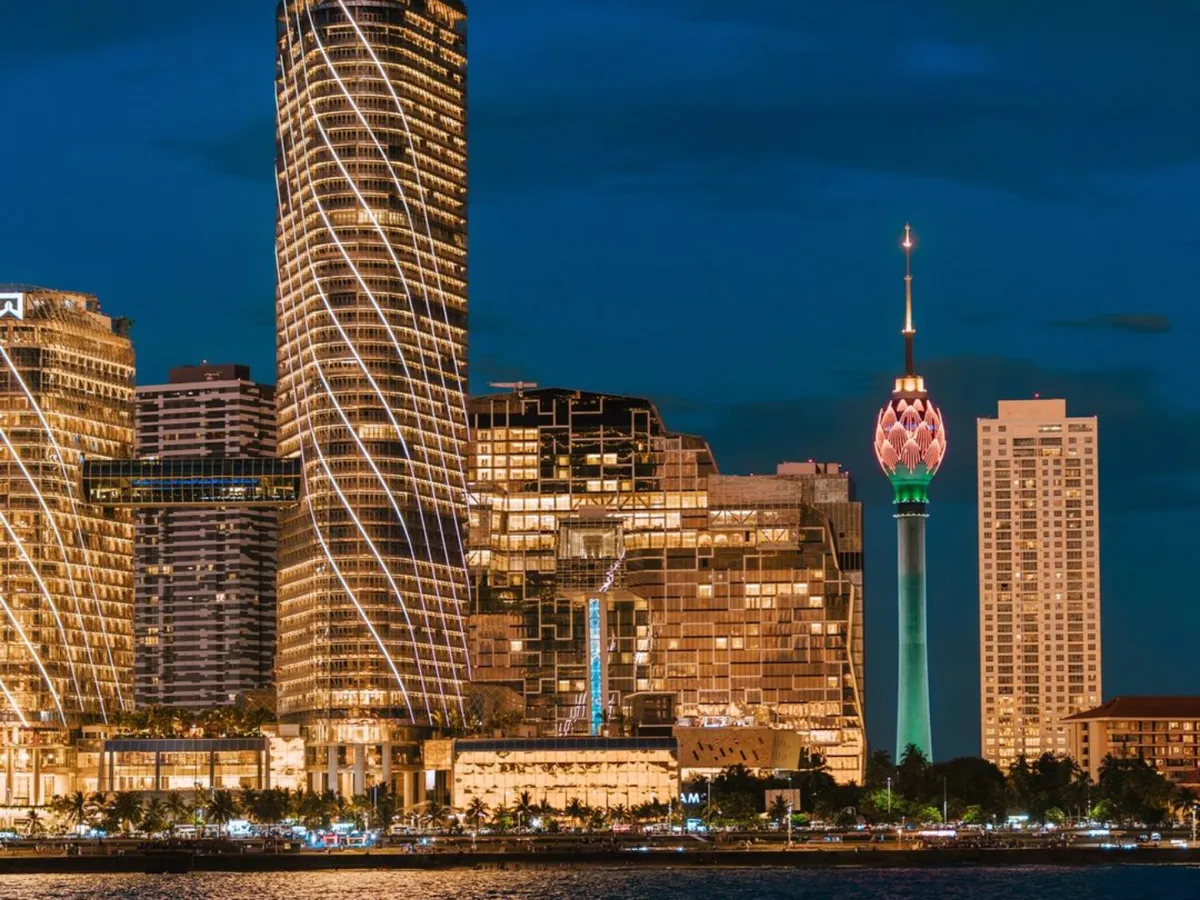
Lotus Tower stands 350 meters (1,150 feet) tall in Colombo and is a significant landmark of Sri Lanka as of 2019. It is the tallest self-supported structure in South Asia and ranks as the 11th tallest tower in Asia and 19th worldwide. Initially planned for Peliyagoda suburb, the government relocated it to Colombo. The lotus-shaped tower serves communication, observation, and leisure purposes. Construction cost is estimated at USD 113 million.
10 min
Colombo Fort Railway Station
Fort railway station is a key rail hub in Colombo served by Sri Lanka Railways. It handles numerous inter-city and commuter trains daily. The station is the main rail gateway to central Colombo and serves as the terminus for most intercity trains across the country.
15 min
Colombo Fort
Colombo Fort is the historic core of Sri Lanka’s capital, reflecting centuries of cultural and architectural development. Established by the Portuguese in the 16th century, it later expanded under Dutch and British rule, each adding unique influences. The area combines old fortifications with modern buildings. Notable landmarks include the Mansion Fort Buildings, which housed colonial merchants and administrators. These buildings feature detailed facades and historical significance. Today, Colombo Fort remains a center for commerce, culture, and tourism.
Colombo Clock Tower
The clock tower was built between 1856 and 1857, completed on 25 February 1857. Designed by Emily Elizabeth Ward, wife of Governor Sir Henry George Ward, construction was overseen by John Flemming Churchill of the Public Works Department. The tower is 29 meters (95 feet) tall and was Colombo’s tallest structure at the time. The original clock was commissioned in 1814 for £1,200 by Governor Sir Robert Brownrigg but was stored until installation in 1857. The lighthouse function ceased on 12 July 1952 due to obstruction by buildings, replaced by the Galle Buck Lighthouse on Marine Drive.
Economic History Museum
The Colombo Economic History Museum is housed in the historic Central Bank building in Colombo Fort and opened in 2013. It presents Sri Lanka’s economic development, focusing on banking and trade history. Exhibits include ancient coins, currency notes, bonds, and banking documents tracing financial evolution from colonial times to today. The museum also covers tea, rubber, and spice trade impacts. Located in a colonial-era building, it offers insights into monetary policies, inflation, and financial crises through interactive displays and archives.
President's House Colombo
The President's House in Colombo, located on Janadhipathi Mawatha, serves as the official residence and office of Sri Lanka’s president. Since 1804, it has housed British governors, governors-general, and presidents. Formerly called the King's or Queen's House until 1972, it has been home to 29 governors and six presidents. Currently, President Gotabaya Rajapaksa uses it for state functions. The Presidential Secretariat operates here, hosting much of the presidential staff.
Old General Post Office
The Old General Post Office (GPO) in Colombo Fort is a colonial-era landmark built in 1895. It was the central hub for Sri Lanka’s postal services for over a century. The neo-Renaissance building features large columns, arches, and spacious halls. Strategically located near the port and government offices, it was vital for mail distribution locally and internationally. The building was damaged during civil unrest and the 1996 Central Bank bombing, leading to its closure. Restoration and repurposing are under consideration.
Cargills Department Store
Cargills (Ceylon) PLC headquarters is located in the historic Cargills Building in Colombo Fort. Constructed in the 19th century during British rule, the red-brick colonial structure was originally a warehouse before becoming Cargills’ flagship department store. It features neoclassical design with arched windows and detailed architecture. The building reflects Colombo’s heritage and commercial history. Today, it manages Cargills’ supermarkets, fast-food chains, and food production across Sri Lanka.
Grand Oriental Hotel
The Grand Oriental Hotel (GOH) in Colombo Fort is a colonial-era hotel overlooking Colombo Port. Originally a British military barracks, it was converted into a hotel in 1875, making it one of Sri Lanka’s oldest hotels. GOH has colonial-style architecture, grand interiors, and classic furnishings. It has hosted writers, diplomats, and traders during Colombo’s maritime peak. The Harbour Room restaurant offers port views. Despite modern competition, GOH remains a historic hospitality landmark.
Old Town Hall
This building is located amid the shops and street stalls of Pettah. It features arches, needle-point columns, yellow walls, and creaky staircases, resembling a haunted mansion. There is no entrance fee; visitors may enter and ask near the main staircase to explore. Adjacent is a small museum with old artifacts. Sugath, the caretaker, can guide visitors upstairs to a musty floor. Nearby rooms with chairs and tables are still used for official meetings occasionally.
15 min
Pettah
Pettah is a commercial neighborhood east of Colombo’s city center Fort area. It is known for the Pettah Market, a series of open-air bazaars and markets. Pettah is one of Sri Lanka’s busiest commercial zones, with numerous wholesale and retail shops, commercial institutions, and buildings. The market layout resembles a large crossword puzzle, allowing traversal from dawn to dusk but not covering every area. The name derives from Tamil 'Pettai,' meaning suburb outside a fort; in Sinhala, it is called 'pita-kotuwa.'
15 min
Pettah Vegetable Market
The vegetable market in Pettah is a busy trading area for fresh produce. Located within Pettah Market, it supplies a wide range of vegetables, fruits, and herbs from across Sri Lanka. Early mornings see trucks arriving with farm produce, creating a lively atmosphere. Vendors unload, sort, and display goods while buyers negotiate prices rapidly. Known for affordable prices, the market is popular for bulk purchases. The mix of colors, smells, and vendor calls offers a distinct cultural experience. Despite congestion, it is vital to Colombo’s food supply.
15 min
Jami Ul-Alfar Mosque
The Red Mosque, or Jami Ul-Alfar Mosque, is a notable landmark in Pettah, Colombo. Built in 1908 by the Muslim community, it features a red-and-white striped façade combining Indo-Saracenic, Gothic, and Neo-Classical styles. It serves as a place of worship and a navigational landmark for sailors. The mosque has domes, minarets, and intricate details. It remains active, hosting hundreds of worshippers, especially on Fridays. The mosque is significant for both religious and architectural reasons.
Kayman’s Gate Belltower
Kayman’s Gate in Pettah marks the site of a former entrance to the Dutch Fort of Colombo, built during the 17th century Dutch colonial period. The name likely derives from the Dutch word for caiman, referencing a crocodile-infested moat once present. The Old Belfry, a British clock tower built in 1875, stands here. It served as a fire alarm and announcement tower. Although the original gate no longer exists, the belfry remains a historical monument amid Pettah’s busy streets, symbolizing Colombo’s colonial heritage.
5 min
Wolvendaal Church
Wolvendaal Church in Pettah is one of Sri Lanka’s oldest Dutch colonial churches, constructed in 1749. Named from the Dutch term for 'Wolf's Dale,' it was so-called because jackals were mistaken for wolves. The church is built in a Greek cross shape with thick walls, high ceilings, and large windows to keep the interior cool. Inside are antique wooden furniture, tombstones of Dutch officials, and a pulpit made from Malaysian ebony. The churchyard contains graves of prominent Dutch colonists. It remains an active religious and historical site.
15 min
Old Parliament Building
The Old Parliament Building in Colombo overlooks the Indian Ocean at Galle Face Green. Completed in 1930 during British rule, it originally housed Ceylon’s Legislative Council and later the Parliament until 1982. The neoclassical building features Greek-Roman architecture with Corinthian columns. It witnessed key political events, including independence in 1948. Currently, it serves as the Presidential Secretariat. The building is not open to the public but is admired for its historic and architectural significance.
Colombo Port City
Port City Colombo is a large urban development on 269 hectares of reclaimed land along Colombo’s coast. Initiated in 2014 and supported by China Harbour Engineering Company (CHEC), it aims to create a modern financial, commercial, and residential hub. The project includes luxury apartments, business districts, malls, hotels, entertainment venues, and a marina. It is positioned to enhance Sri Lanka’s economy by attracting global investors and establishing Colombo as a South Asian financial center. The site is adjacent to Colombo Fort and lies on major shipping routes. The project has faced environmental and political challenges.
5 min
Galbokka Lighthouse
The Galbokka Lighthouse near Colombo Harbour in Galle Buck Green was built in 1952, replacing the older Colombo Lighthouse. It is 29 meters (95 feet) tall with a white cylindrical tower and a viewing deck. The lighthouse provides views of the Indian Ocean, Colombo Port, and city skyline. It remains active for navigation but is located within a naval base, restricting public entry. Visitors can view the structure from the nearby Galle Buck Green park. The lighthouse represents Colombo’s maritime heritage and role as a key shipping hub.
10 min
Colombo Maritime Museum
The Sri Lanka Ports Authority Maritime Museum, known as the Colombo Maritime Museum, is located at 19 Chaithya Road near Colombo Port. It is operated and maintained by the Sri Lanka Ports Authority.
15 min
Galle Face Green
Galle Face Green has been an important social space for Colombo residents, particularly developed by the British as a leisure ground. In colonial times, it was a place for evening promenades by elite ladies. Sports such as cricket, football, polo, and horse racing were held there. Horse racing gained popularity in the 1840s, and the Ceylon Turf Club was established between 1840 and 1860, with official records from 1866. The seaside promenade was constructed during Governor Ward’s term in 1859. A plaque commemorates his contribution to creating this social gathering area.
Ceylon Tea Tasting
Ceylon Tea Tasting in Colombo offers visitors a chance to experience Sri Lanka’s renowned tea culture. As the origin of Ceylon Tea, Sri Lanka hosts tasting sessions in tea boutiques, specialty stores, and luxury hotels. Guests sample various teas including black, green, white, and oolong, each with distinct flavors. Experts explain tea grading, brewing, and aroma appreciation. Popular locations include Zylen Tea. Tastings often include pairings with sweets and savory items. The experience combines education and cultural insight into Sri Lanka’s tea industry.
20 min
Gangaramaya Temple
Gangaramaya Temple in Colombo is a significant temple blending modern architecture with cultural elements. Situated on Beira Lake, it was completed in the late 19th century. The temple serves as an important religious and cultural site in the city.
20 min
Cenotaph War Memorial
The Cenotaph War Memorial is a solemn monument honoring those who died in military conflicts, especially World War I and II. The most well-known Cenotaph is in Whitehall, London, designed by Sir Edwin Lutyens and unveiled in 1920. It hosts the UK’s National Service of Remembrance annually. The term 'Cenotaph' means 'empty tomb,' symbolizing soldiers buried elsewhere. Many countries, including Canada, Australia, and Hong Kong, have similar memorials. These memorials are simple in design but carry deep meaning, often inscribed with 'The Glorious Dead.' They serve as places for wreath-laying and moments of silence, reminding generations of war’s cost and the value of peace.
10 min
Independence Memorial Hall
The Independence Memorial Hall in Colombo commemorates Sri Lanka’s independence from British rule on 4 February 1948. Located in Independence Square, Cinnamon Gardens, it is designed in ancient Kandyan architectural style. The hall features stone pillars with intricate carvings and a statue of D.S. Senanayake, the first Prime Minister. It is used for state ceremonies, cultural events, and national celebrations. Beneath the hall is the Independence Memorial Museum, displaying artifacts and documents about Sri Lanka’s independence journey. The site is surrounded by a park and walking paths and is popular with visitors and locals.
10 min
+ 2 more places this tour can include
Meeting point
“All guest locations, including hotels, the railway station, Colombo bus stand, and shopping centers.”
End point
“All guest locations, including hotels, the railway station, Colombo bus stand, and shopping centers.”
Languages
Cancellation policy
- Cancel at least 24 hours before start for a full refund.
Additional info
More things to do in Colombo
- Full-Day Colombo City Tour in a Private Car
- Colombo Private Half-Day City Tour with Licensed Guide
- Colombo Private Tuk-Tuk City Tour with All Entry Fees Included
- Very Cheap Colombo 4-Hour Tuk-Tuk City Tour with All-Inclusive Entry Fees
- Sri Lanka Round Tour 7 Days with Private Driver