
Hiroshima Peace & History Walking Tour: Why the Atomic Bomb Was Dropped
by Localized Walking & Food Tours
Choose from 1 available option
How do you want to book?
Book on Viator Confirmed right away, but you pay full price.$56Overview
This walking tour in Hiroshima lasts about two and a half hours and covers the historical, political, and military reasons why the atomic bomb was dropped on August 6, 1945. The tour begins at Hiroshima Gogoku Shrine, where visitors spend 20 minutes exploring the shrine’s traditional architecture and learning about its role as a place of remembrance. Next, the group walks to Hiroshima Castle for 20 minutes. The castle, originally built in the 1590s and destroyed by the atomic bomb, has been reconstructed and now houses a museum about Hiroshima’s history, Japanese feudal architecture, and samurai culture. Afterward, the tour continues for 30 minutes at Hiroshima Green Arena, a multi-purpose indoor arena used for sports and cultural events. Participants then visit Orizuru Tower, a modern 13-story building next to Peace Memorial Park that offers panoramic views of the city, including the Atomic Bomb Dome. The tour includes a 20-minute visit to the Atomic Bomb Dome, the preserved ruin at the bomb’s epicenter that stands as a peace monument and UNESCO World Heritage Site. Nearby, the group spends 10 minutes at the Children’s Peace Monument, which honors child victims of the bombing with a statue of Sadako Sasaki and thousands of paper cranes sent from around the world. The final stop is Hiroshima Peace Memorial Park, where visitors spend about 30 minutes walking through the park’s memorials, museums, and green spaces dedicated to those affected by the bombing. All fees and taxes are included, but bottled water is not provided.
Highlights
What's included
What's not included
Itinerary
Hiroshimagokoku Shrine
The tour begins at Hiroshima Gogoku Shrine where visitors explore its architecture and peaceful setting. The shrine was originally built to honor protective deities of Hiroshima domain and now serves as a place of remembrance for those affected by historical events. Visitors spend about 20 minutes here.
20 min
Hiroshima Castle
Next is Hiroshima Castle, also called Carp Castle, first built in the 1590s as the residence of the feudal lord of Hiroshima domain. The castle was destroyed by the atomic bomb in 1945 and later reconstructed. It now operates as a museum showcasing Hiroshima’s history, samurai culture, and Edo period architecture. The castle grounds include a moat and gardens. Visitors spend approximately 20 minutes here.
20 min
Hiroshima Green Arena
The group visits Hiroshima Green Arena, a multi-purpose indoor sports center used for basketball, volleyball, martial arts, concerts, and cultural festivals. The arena is a key venue in Hiroshima and the stop lasts about 30 minutes.
30 min
Orizuru Tower
Orizuru Tower, a 13-story modern building opened in 2016 near the Peace Memorial Park, offers panoramic views of the city, including the Peace Park and the Atomic Bomb Dome. It is known for its distinctive architecture and is included as a notable stop on the tour.
Atomic Bomb Dome
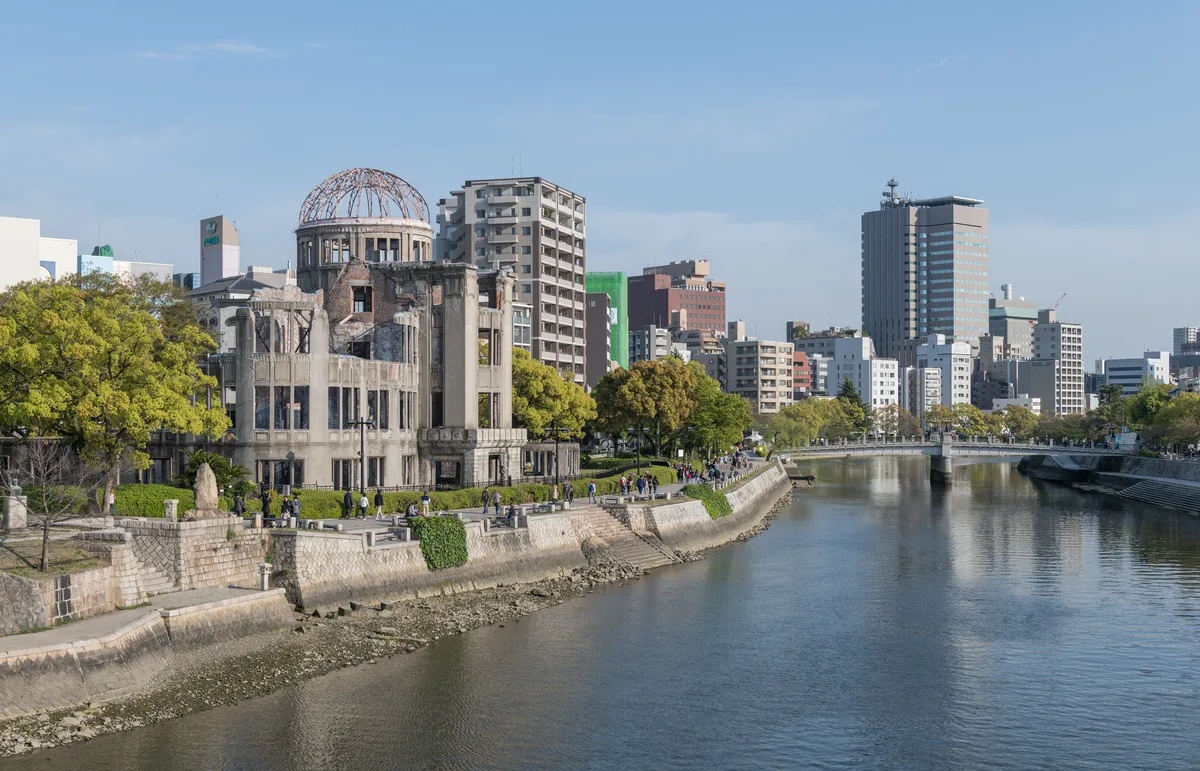
The Atomic Bomb Dome, formerly the Hiroshima Prefectural Industrial Promotion Hall, is located close to the bomb’s blast center. It was one of the few buildings partially left standing after the August 6, 1945 atomic bombing. The exposed steel frame and ruined walls have been preserved as a monument to nuclear destruction and peace. This site is a UNESCO World Heritage Site and visitors spend about 20 minutes here.
20 min
Children's Peace Monument
Located in Peace Memorial Park, the Children's Peace Monument commemorates Sadako Sasaki and other child victims of the atomic bomb. Sadako, who suffered from radiation-induced leukemia, folded origami cranes as a symbol of hope. The monument features her statue holding a golden crane and is surrounded by thousands of colorful paper cranes sent from children worldwide. Visitors spend about 10 minutes here.
10 min
Hiroshima Peace Memorial Park
The final stop is Hiroshima Peace Memorial Park near the explosion’s epicenter. The park contains several memorials and museums including the Peace Memorial Museum, Atomic Bomb Dome, and Children’s Peace Monument. It features green spaces, water elements, and wide paths intended for reflection. Visitors spend around 30 minutes walking through the park.
30 min
Meeting point
Guide will be waiting for you in front of Hiroshima Gogoku Shrine around the Torii Gate near the main Hall. ★Important★ Viator App have some bugs that brings you to the end point. Please use your smartphone App to find the meeting point.
End point
Tour will end in front of Peace Memorial Museum
Languages
Cancellation policy
- Cancel at least 24 hours before start for a full refund.
Additional info
More things to do in Hiroshima
- Hiroshima and Miyajima 1-Day Bus Tour with Lunch
- Full-Day Hiroshima and Miyajima Bus Tour from Hiroshima
- Hiroshima and Miyajima Day Trip with Itsukushima Shrine and Ferry
- Hiroshima 2-Hour Peace Cycling Tour on Electric Bicycle with Local Guide