
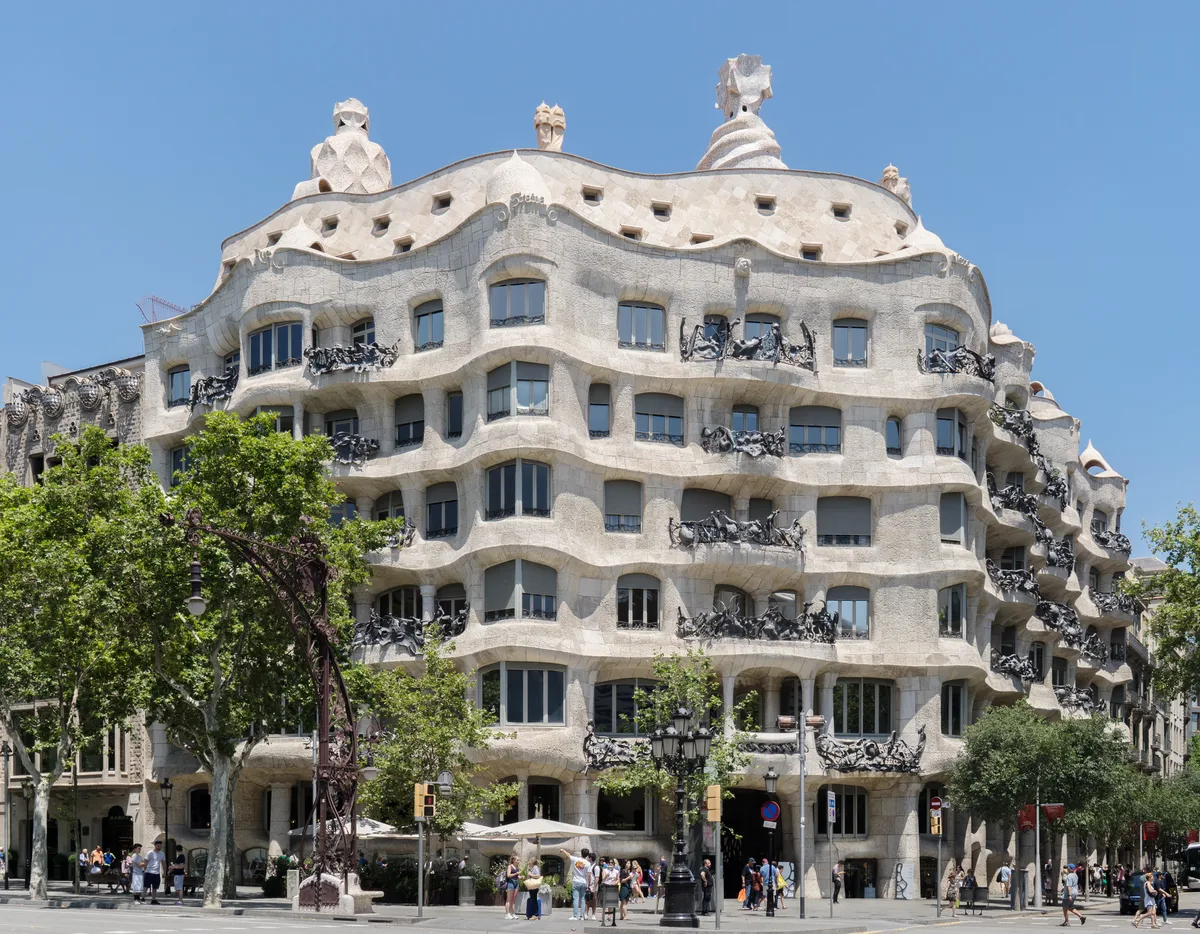
La Pedrera-Casa Milà Admission Ticket with Audioguide and Rooftop Access in Barcelona
by Fundacio Catalunya La Pedrera
Choose from 1 available option
How do you want to book?
Book on Viator Confirmed right away, but you pay full price.$78.74Overview
La Pedrera, also called Casa Milà, was built between 1906 and 1912 and was the last project Antoni Gaudí worked on before focusing on La Sagrada Familia. This ticket grants entry to the building’s interior and rooftop, covering about 1.5 hours of self-paced exploration with an audio guide. Visitors start by entering the decorative lobbies and two courtyards on Passeig de Gràcia and Provença streets, where swirling murals and mosaics are visible. The audio guide explains Gaudí’s life and architectural approach as guests move through the Exhibition Hall, which was once the home of the Milà family who commissioned the building. The tour continues to the rooftop terrace, where visitors can see the spiraling corkscrew chimneys known as the Warrior Rooftop, along with panoramic views across Barcelona. The visit also includes the Whale Attic, known as Gaudí Space, which presents information about the architect’s life and work. The building covers 4,500 square metres across five floors. The ticket includes access to all these areas and the free audio guide, allowing visitors to spend as much time as they want within the 90-minute duration. Food, drinks, and transportation are not included.
Highlights
What's included
What's not included
Itinerary
La Pedrera - Casa Mila
La Pedrera, designed between 1906 and 1912, is one of Barcelona’s landmarks and the last building Gaudí worked on before La Sagrada Familia. It was commissioned by the Milà family and is also known as Casa Milà, meaning ‘the quarry.’ Visitors receive an audio guide to explore the interior at their own pace. The tour covers the decorative lobbies and two courtyards on Passeig de Gràcia and Provença streets, featuring swirling murals and mosaics. The Exhibition Hall was formerly the residence of the Milà family. The rooftop terrace offers views of the corkscrew chimneys and wide views of Barcelona’s cityscape.
Languages
Cancellation policy
- All sales are final. No refund is available for cancellations.
Additional info
More things to do in Barcelona
- Montserrat Half-Day Bus Tour with Tapas and Gourmet Wines from Barcelona
- Private Priorat Wine Tour with Tastings and Lunch from Barcelona
- Barcelona and Montserrat 8-Hour Semi-Private Tour with Pickup
- Sagrada Familia, Park Guell & Gaudi Private Full-Day Tour with Tapas in Barcelona
- Barcelona Wax Museum Admission Ticket
- Barcelona 1.5-Hour Sailing Experience with Vermut, Drinks and Snacks