
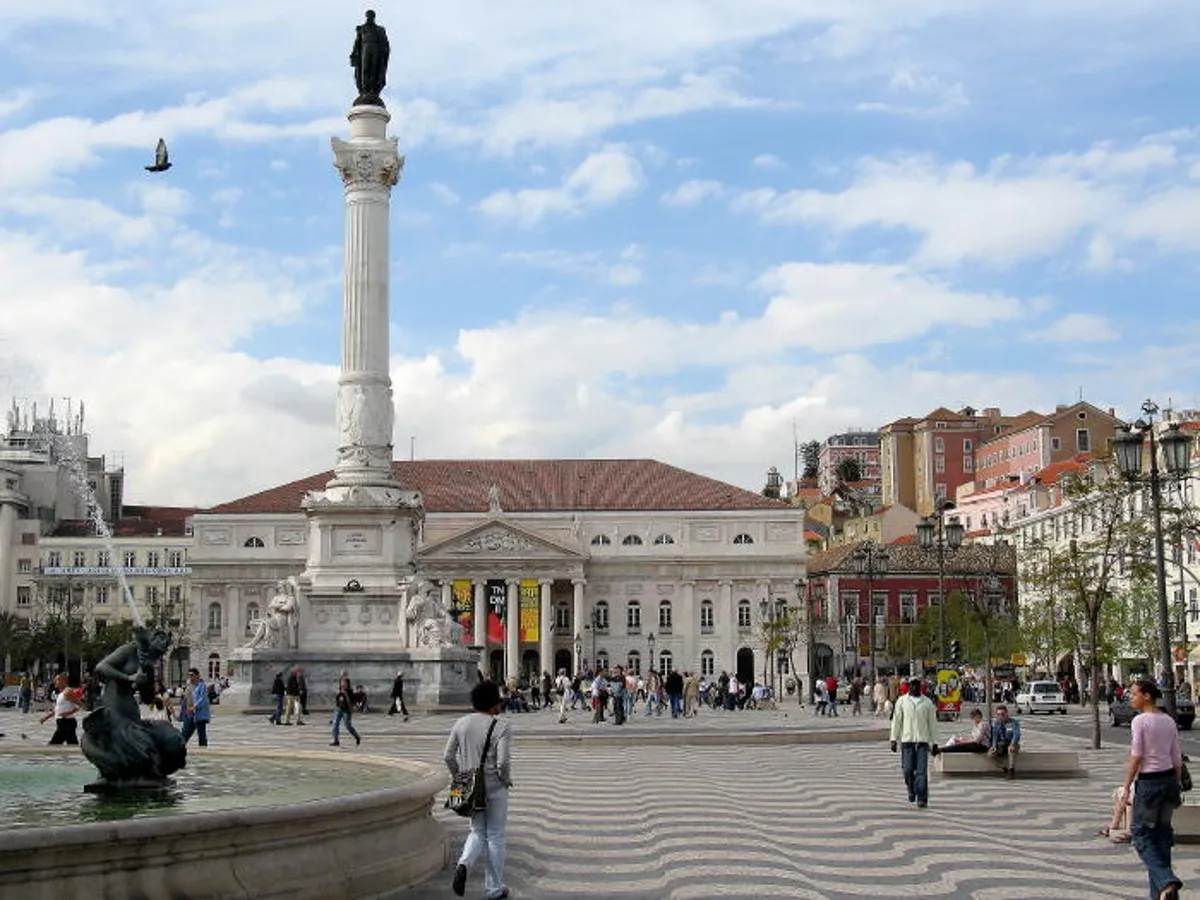
Lisbon Small-Group Guided Walking Tour of Alfama, Chiado, Rossio and Historic Center
by Inside Lisbon Tours
Choose from 4 available options
How do you want to book?
Book on Viator Confirmed right away, but you pay full price.€38Overview
This small-group walking tour covers Lisbon’s central neighborhoods and main landmarks over about 3 to 4 hours. It begins in Rossio Square (Praça D. Pedro IV), located in the Baixa district, where the group learns about the city’s layout and history. The route continues past the Igreja De S Domingos on São Domingos square and along Avenida da Liberdade, known as Lisbon’s most upscale avenue. Visitors stop at Praça dos Restauradores, which features an obelisk commemorating Portugal’s independence restoration in 1640. The tour proceeds to Rossio Train Station, noted for its 16th-century Manueline architectural style, before arriving at Largo do Carmo, a square significant for both its 14th-century convent and the 1974 Carnation Revolution. The group then visits the Elevador de Santa Justa, a historic monument offering a high viewpoint of the city. Next is Chiado, a refined neighborhood from the 19th century with preserved shops and cafes, followed by a walk down Rua Augusta, Lisbon’s main street. The tour includes a visit to the Baixa district, rebuilt after the 1755 earthquake with innovative antiseismic urban design, considered the city center. A brief stop at the Miradouro Chão do Loureiro provides a panoramic view. The oldest district, Alfama, is explored next, featuring narrow streets and a connection to Fado music. The group also sees the statue of King José I and finishes at Praça do Comércio near the Tagus river, a square rebuilt after the earthquake on the site of the former Royal Ribeira Palace. The tour includes a local guide, a wine tasting with tapas, and a traditional pastel de nata pastry. Group size is limited to 14 people for a more personal experience.
Highlights
What's included
What's not included
Itinerary
Praca Dom Pedro IV
Rossio Square, officially named Praça D. Pedro IV, is at the heart of Lisbon’s Baixa district and serves as a central meeting point in the city.
10 min
Igreja De S Domingos
A church located on São Domingos square known for its historical presence in the city.
5 min
Avenida da Liberdade
Lisbon’s most expensive and elegant avenue, known for luxury shops and upscale surroundings.
Praca Dos Restauradores
This square is dedicated to the restoration of Portugal’s independence in 1640, after 60 years of Spanish rule. The central obelisk, inaugurated in 1886, displays the names and dates of battles fought during the Portuguese Restoration War in 1640.
5 min
Estacao Do Rossio
Rossio Train Station features an exterior inspired by 16th-century Manueline architecture and is one of the most architecturally impressive buildings in Lisbon’s historic center.
5 min
Largo do Carmo
A small square marked by the ruins of a 14th-century convent and significant for events during the 1974 Carnation Revolution.
10 min
Elevador de Santa Justa
An iron elevator built in the early 20th century that provides elevated views over Lisbon’s historic neighborhoods.
10 min
Chiado
A 19th-century neighborhood favored by intellectuals and wealthy residents, known for its preserved cafes and shop facades.
10 min
Rua Augusta
The main pedestrian street in Lisbon’s downtown area, lined with shops and cafes.
5 min
Baixa de Lisboa
The downtown district rebuilt after the 1755 earthquake with innovative antiseismic architecture, forming the city’s commercial and administrative center.
15 min
Miradouro Chao do Loureiro
Drive-by stop with no additional details provided.
5 min
Alfama
Lisbon’s oldest neighborhood, characterized by narrow streets and known for its association with traditional Fado music.
20 min
Estatua de D. Jose I
A statue of King José I, who ruled from 1750 until his death and was known for his interest in hunting and opera collections.
Praca do Comercio
A large square near the Tagus river, historically the site of the Royal Ribeira Palace before the 1755 earthquake and later rebuilt as part of the Pombaline downtown reconstruction.
10 min
Meeting point
Meet by the statue in the large square with two fountains and a tall column topped with a man. Look for the guide with a blue badge and a blue bag or black backpack. If you see a man on a horse, you're in the wrong square. For ride-shares, select Praça Dom Pedro IV in Lisbon (not Queluz)
Languages
Cancellation policy
- Cancel at least 24 hours before start for a full refund.
Additional info
More things to do in Lisbon
- Private Full-Day Wine Tour from Lisbon with Tastings and Visits to Livramento Market and Arrábida
- Lisbon Hop-On Hop-Off Bus, Tram, and River Cruise Ticket for 72 or 96 Hours
- Lisbon Sailboat Tour on the Tagus River with Drinks Included Morning and Sunset
- Lisbon 2-Hour Sunset Boat Ride with Music and Drinks
- City Centre Run in Lisbon - 1h30 Guided Tour with Local Runner
- Central Lisbon E-Bike Tour Including Parque Eduardo VII, Baixa, Chiado & Time Out Market