
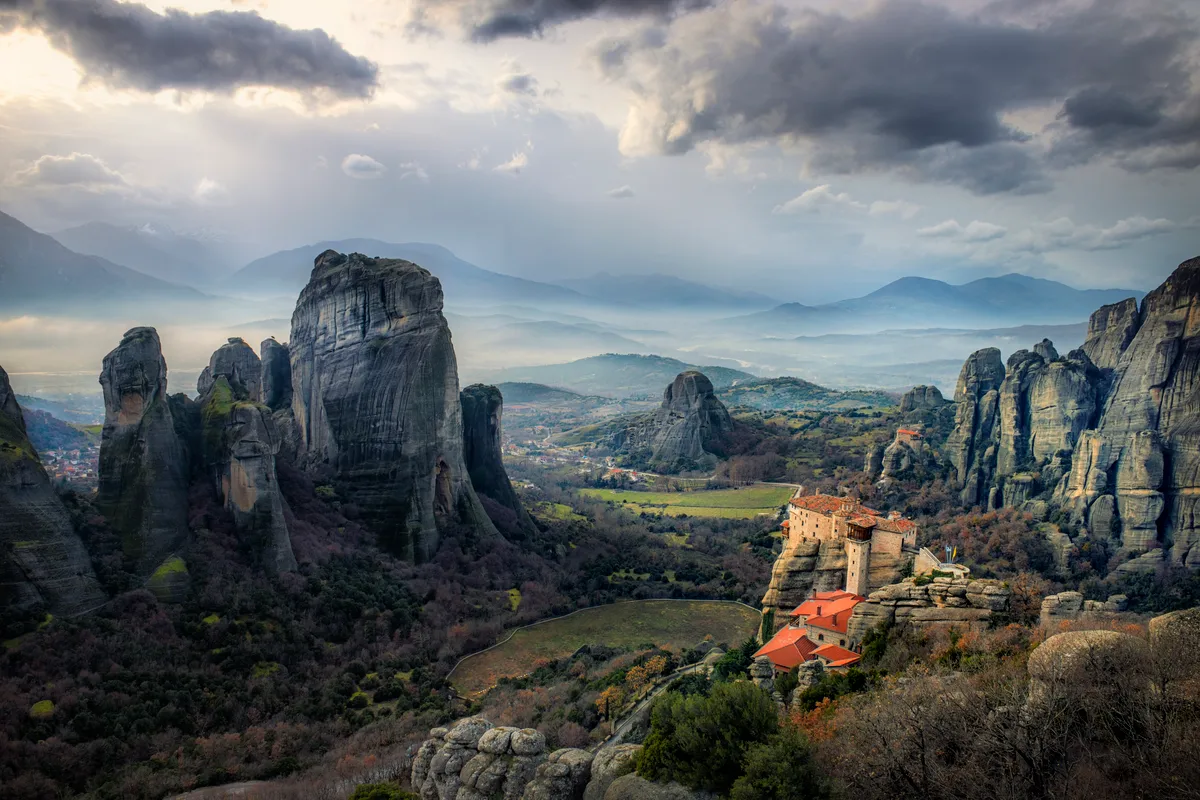
Meteora Monasteries Half-Day Small Group Tour with Transport
by Visit Meteora Travel
Choose from 1 available option
How do you want to book?
Book on Viator Confirmed right away, but you pay full price.$81.06Overview
This half-day bus tour in Meteora lasts about four hours and includes transport with hotel pickup and drop-off in Kalambaka or Kastraki. A local English-speaking guide leads the group, sharing facts about the monasteries and the monks who lived there. The tour visits three main monasteries where participants can explore independently as no guide accompanies inside. Visitors will see several other monasteries from the outside during the trip. The tour offers free WiFi on board, bottled water, and a smart audio guide in multiple languages including French, Spanish, German, Italian, Portuguese, Chinese, Japanese, and Polish. Entrance fees to the monasteries are not included and must be paid separately in cash, as some monasteries may not accept cards. The guide provides commentary outside but does not enter the monasteries, allowing guests to walk at their own pace within the sites. Participants should wear comfortable shoes and follow the strict dress code for the monasteries: men must wear trousers and long sleeves, while women need a long skirt. If visitors arrive in shorts, the tour provides appropriate clothing. This tour suits individuals or small groups wanting to avoid driving and parking difficulties while visiting Meteora’s historic monasteries.
Highlights
What's included
What's not included
Itinerary
Meteora
The Meteora area contains 24 monasteries built on rock summits between the 14th and 16th centuries. Six monasteries remain active and accessible. These became centers of Orthodox Christianity during the Byzantine era, housing religious art and manuscripts now exhibited in their museums. The site is recognized as a UNESCO World Heritage Site and protected as a Natura 2000 Ecological Zone.
Agios Nikolaos Anapaphsas
This monastery, founded at the end of the 14th century, is the first encountered on the route to Meteora's main monasteries. The name Anapaphsas may come from a benefactor or from its role as a resting place for pilgrims before continuing their ascent.
Roussanou Monastery
Founded at the end of the 16th century, the main church was decorated about 30 years later. The monastery is on a lower rock, making it more accessible than others. Originally established by monks, it was damaged in World War II and became a convent in 1988. Visitors spend about 45 minutes here.
45 min
Varlaam Monastery
Varlaam is the second largest monastery, located opposite the Great Meteoron. Founded in the mid-14th century by Hosios Varlaam, its main church was built in 1541-42 by two brothers from Ioannina. The church decorations date from 1548 and are attributed to the hagiographer Frago Catelano. Visitors typically spend 45 minutes here.
45 min
Great Meteoron Monastery
The largest and oldest monastery, built on a massive rock that appears suspended in the air, giving the site its name. Founded by Saint Athanasios the Meteorite, it marks the start of organized monastic life in Meteora. Visitors usually spend about one hour exploring this site.
60 min
Holy Trinity Monastery
This monastery is the hardest to reach, located atop a steep rock. Visitors must climb roughly 140 steps after following a pathway to the rock's base. It has existed since at least 1362 and offers wide views of the surrounding area.
Agios Stefanos
The most accessible monastery, reached by crossing a small bridge rather than steps. It dates back to the early 12th century with significant rebuilding in 1545. This site suits visitors unable to climb steps but who wish to visit a Meteora monastery.
Languages
Cancellation policy
- Cancel at least 24 hours before start for a full refund.
Additional info
More things to do in Meteora
- Meteora All Monasteries Tour with Photo Stops
- Meteora Small Group Hiking Tour with Transfer and Visit to Ypapanti and Great Meteoro Monastery
- Meteora Sunset Small-Group Tour with Saint Stephen Monastery and Hermit Caves
- Majestic 4-Hour Sunset Meteora Tour with Local Guide, 6 Monasteries, Byzantine Church & Hermitages