
Salt Lake City Fully Guided Bus Tour to Hear the Tabernacle Choir Live
by City Sights Salt Lake City Tours
Choose from 1 available option
How do you want to book?
Book on Viator Confirmed right away, but you pay full price.$178Overview
The highlight of this tour is attending a live Tabernacle Choir event, featuring 360 voices and the famous 11,632-pipe organ during Music and the Spoken Word broadcast. Guests may select either the Sunday live concert or Thursday’s rehearsal, each offering a unique insight into this Grammy-winning choir’s work that has been heard since 1929 and performed for U.S. Presidents. In addition to the performance, the tour includes about 2.5 hours on an air-conditioned coach with a professional guide who narrates the city’s landmarks. Stops include Temple Square, the Utah State Capitol with mountain views, Victorian mansions, the Cathedral of the Madeleine, and pioneer monuments. The route minimizes walking and allows time for photo opportunities. The Salt Lake Tabernacle itself is a feature, built in 1867 with exceptional acoustics and no interior pillars, housing the world-famous organ. The tour covers many historic sites such as the Salt Lake Utah Temple exterior, the LDS Conference Center with its large 21,000-seat auditorium and 7,667-pipe organ used in summer performances, and the Mormon Battalion Monument commemorating the longest infantry march in U.S. history. Other stops include the City and County Building, FamilySearch Library, Fort Douglas Military Museum, and more. The entire tour lasts about three and a half hours, combining the choir event and the guided city tour on a comfortable coach with minimal walking suitable for all ages.
Highlights
What's included
What's not included
Itinerary
The Tabernacle Choir at Temple Square
Attend the live broadcast of Music and the Spoken Word on Sunday (30 min), featuring 360 voices performing inspiring music. This Emmy and Grammy-winning choir has performed for six U.S. Presidents. On Thursday (1 hour), access the Choir's weekly rehearsal, observe the conductor, hear multiple pieces, and experience the acoustics of the 1867 Salt Lake Tabernacle, where a pin can be heard dropping from 170 feet. The venue includes the 11,632-pipe organ. Summer performances occur at the LDS Conference Center, seating 21,000 with a 7,667-pipe organ.
60 min
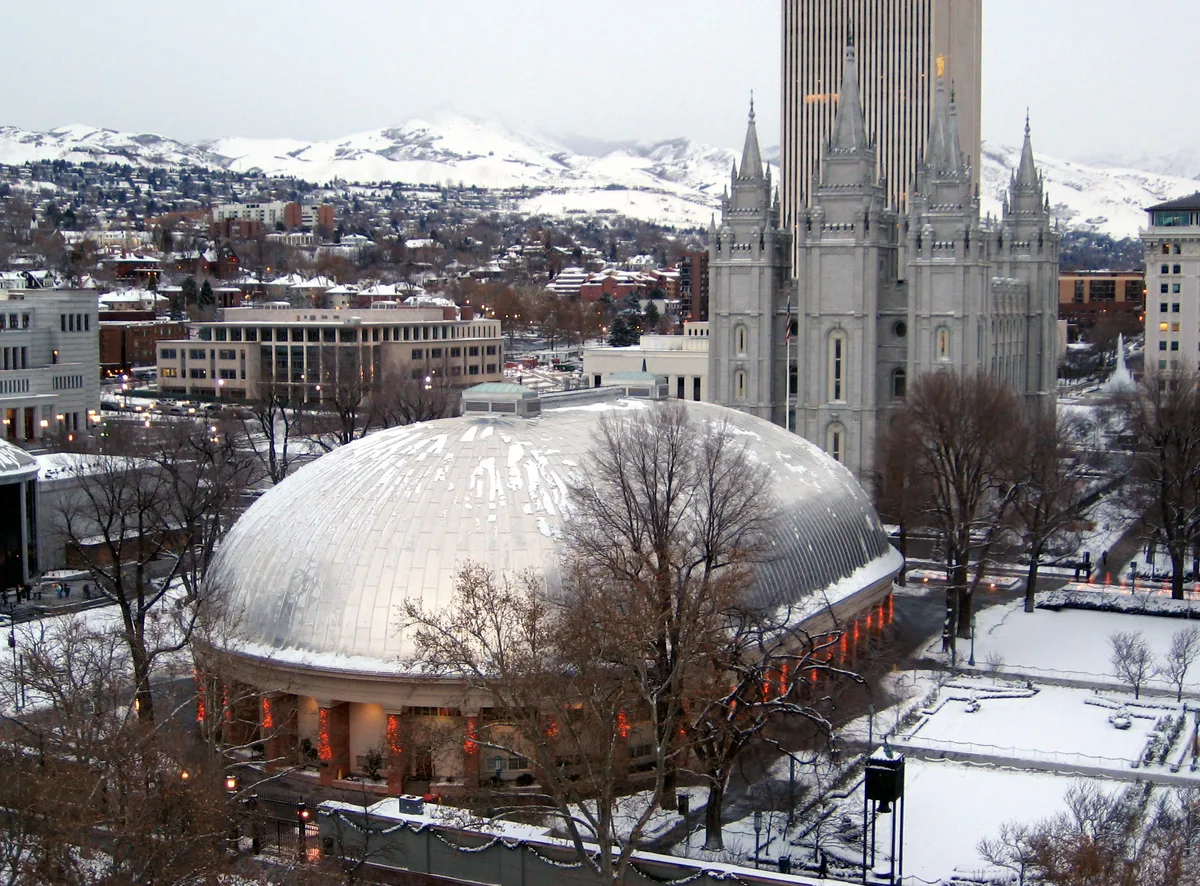
Salt Lake Tabernacle
Enter the Salt Lake Tabernacle, built in 1867 by Mormon pioneers with a self-supporting dome spanning 150 feet without interior pillars, allowing unobstructed views and acoustics where a pin drop is audible from 170 feet. It houses the world-famous 11,632-pipe Tabernacle Organ. The guide explains pioneer construction, acoustic engineering predating modern technology, and the cultural importance of this National Historic Landmark. Visitors see intricate woodwork, the organ facade, and elegant galleries that have welcomed millions over 150+ years.
5 min
Salt Lake Utah Temple
View the Salt Lake Temple, completed over 40 years (1853-1893) with granite hand-cut by pioneer craftsmen from nearby mountains. While the interior is reserved for Church members, the guide discusses its construction, symbolic architecture, and cultural meaning. The six spires include the tallest at 210 feet, topped by the Angel Moroni statue. The guide shares pioneer dedication stories and architectural features that define this National Historic Landmark, which has shaped Salt Lake City's skyline for over 130 years.
1 min
The Conference Center Of The Church Of Jesus Christ Of Latter-day Saints
Visit the LDS Conference Center, completed in 2000 as the world's largest religious auditorium, seating 21,000 with advanced acoustics. Features include a rooftop garden with waterfalls and native plants, grand bronze entry doors, and in summer, the 21,000-seat auditorium with a 7,667-pipe organ hosting the Tabernacle Choir. The guide explains construction techniques, sound engineering ensuring clear acoustics from every seat, and the building's role as a modern counterpart to the historic Tabernacle.
1 min
Temple Square
Explore Temple Square, a 10-acre spiritual and historical site in downtown Salt Lake City. The 35-acre complex includes the Salt Lake Temple with six granite spires, the historic Tabernacle with renowned acoustics, seasonal flower displays, and pioneer history monuments. The guide shares stories about the 40-year Temple construction and pioneer settlers. Also visible are the Assembly Hall's Gothic Revival architecture, the Seagull Monument, and well-maintained gardens, all part of this National Historic Landmark central to Mormon heritage.
10 min
Utah State Capitol
Visit the Utah State Capitol on Capitol Hill, completed in 1916 with a copper dome rising 285 feet. This Neoclassical building offers views of Salt Lake City and the Wasatch Mountains. The guide discusses Utah's statehood, building restoration, and design symbolism. Inside, see the grand rotunda with marble columns, murals depicting Utah history, and a large chandelier. Outside, panoramic views capture the Salt Lake Valley framed by mountains. The Capitol is a National Historic Landmark representing Utah's heritage and democracy.
20 min
City and County Building
Admire the City and County Building, completed in 1894 in Romanesque Revival style with sandstone walls and a 256-foot clock tower. It features ornate turrets, arched windows, and detailed stone carvings. The guide tells of its construction during a pivotal time in Salt Lake City, its 130-year role as government seat, and restoration efforts. The landscaped grounds provide photo opportunities of this National Historic Landmark, whose Victorian-era design contrasts with the modern city.
1 min
Mormon Battalion Monument
Visit the Mormon Battalion Monument honoring 500 Latter-day Saint volunteers who marched 2,000 miles from Iowa to San Diego during the Mexican-American War (1846-1847). The guide recounts their military discipline, hardships crossing deserts and mountains, and how their pay supported Salt Lake Valley settlement. The monument includes bronze sculptures and plaques depicting their journey and sacrifice, illustrating a lesser-known chapter of Western expansion and the complex relationship between early Latter-day Saints and the U.S. government.
1 min
Cathedral of the Madeleine
See the Cathedral of the Madeleine, completed in 1909 in Gothic Revival style as Utah's only Catholic cathedral. It features twin spires rising 220 feet, intricate stonework, and notable stained glass windows. The guide shares its construction in a predominantly Latter-day Saint city, European craftsmanship, and 1990s restoration returning the interior to original condition. The ornate Spanish Gothic façade and detailed exterior stand in Salt Lake City's historic Avenues neighborhood among Victorian mansions. This National Historic Landmark reflects the city's religious diversity.
5 min
City Creek Center
View City Creek Center, a $1.5 billion development opened in 2012 spanning three city blocks downtown. It combines upscale retail with landscaped outdoor spaces and features a retractable glass roof and restored historic City Creek flowing through the property. The guide explains its design vision and role transforming downtown Salt Lake City into a pedestrian-friendly shopping area. With over 100 stores and restaurants, the center blends modern architecture, gardens, fountains, and the natural waterway that sustained early pioneers.
1 min
This is the Place Heritage Park
Visit the site where Brigham Young declared "This is the right place" in 1847, marking the end of a 1,300-mile pioneer journey from Illinois. The location overlooks the Salt Lake Valley, the Wasatch Mountains, and the Great Salt Lake. The guide recounts the pioneers' trek, challenges, and why this valley became their destination. A 60-foot monument commemorates this moment in Western expansion. Visitors see the panoramic views that inspired hope and new beginnings for thousands of settlers who followed.
10 min
Mormon Pioneer National Historic Trail
Experience part of the Mormon Pioneer National Historic Trail, the 1,300-mile route used by over 70,000 Latter-day Saint pioneers traveling from Illinois to Utah between 1846 and 1869. The guide shares stories of determination and sacrifice as families crossed plains, rivers, and mountains with handcarts and wagons. Learn about the hardships of weather, supplies, and terrain. Monuments and markers along the trail commemorate this migration that shaped the American West and the founding of Salt Lake City.
10 min
Salt Lake City Public Library
View the Salt Lake City Public Library, opened in 2003 and designed by Moshe Safdie. This six-story building features a curved glass wall and rooftop garden, costing $84 million. The guide explains its innovative design and why it is considered a leading example of contemporary public architecture. The building's dramatic angles and sculptural form contrast with nearby historic structures. This architectural landmark represents Salt Lake City's modern and forward-thinking public spaces.
1 min
Governor's Mansion
See the Utah Governor's Mansion, built in 1902 in Salt Lake City's Federal Heights neighborhood. Originally a private residence, it became the official governor's home in 1937 and has housed Utah's governors for nearly 90 years. The guide discusses its architectural style, transformation, and political history. The mansion overlooks the city with manicured grounds and is surrounded by historic homes. It symbolizes Utah's governmental heritage and the development of elegant early neighborhoods.
1 min
Beehive House
View the Beehive House, Brigham Young's residence from 1854 to 1877 and a significant pioneer-era building in Salt Lake City. Named for the beehive symbol representing industry and cooperation, this adobe structure served as Utah's territorial governor's home and a social center. The guide shares stories of Young's life, territorial politics, and the house's architectural details. Located next to Temple Square, it is a National Historic Landmark illustrating pioneer leadership and early city development.
1 min
Council Hall
See Council Hall, a red-brick Greek Revival building that served as Utah's territorial capitol from 1866 to 1896. The guide recounts political events held here, including debates on polygamy, women's suffrage, and governance leading to statehood in 1896. Originally downtown, the building was moved brick-by-brick to Capitol Hill in 1963 to prevent demolition. Its proportions and historic role make it a National Historic Landmark representing Utah's political heritage and transition from territory to state.
1 min
Olympic Cauldron Park
View the Olympic Cauldron, a 72-foot glass and steel structure symbolizing the 2002 Winter Games in Salt Lake City. The guide explains how the city earned the Olympic bid, built venues, and hosted athletes from 77 nations. Stories include record-breaking moments, the Opening Ceremony, and the Games' lasting legacy. The cauldron's modern design with a mountain backdrop reflects the spirit of innovation and unity from the event, remaining a state symbol.
1 min
Delta Center
See the Delta Center, Salt Lake City's arena and home of the Utah Jazz, located downtown. It has hosted NBA playoffs, Olympic figure skating, and major concerts. The guide shares its 1990s construction, impact on the city's skyline, connection to the 2002 Winter Games, and memorable Jazz basketball moments. The venue continues to unite Utahns through sports and entertainment. The exterior stands as a symbol of energy, community, and the city's spirit.
1 min
Joseph Smith Memorial Building
Admire the Joseph Smith Memorial Building, formerly the Hotel Utah, opened in 1911 as Salt Lake City's first luxury hotel. The white terracotta Beaux-Arts structure hosted presidents, celebrities, and travelers. The guide tells of its rooftop dining, ballrooms, and famous guests. After restoration, it was rededicated preserving its architectural beauty and legacy. The building reflects Utah's hospitality history and downtown's cultural crossroads during its golden age.
1 min
The Gateway
Visit the Gateway, an open-air district blending history, architecture, and modern life. Built for the 2002 Winter Olympics, it transformed former rail yards into a cultural hub with art, dining, and public spaces. The guide explains its design vision and role in reshaping the city for the Games. Features include fountains, public art, and the restored depot, connecting Utah's past with present-day creativity. The Gateway symbolizes Salt Lake City's renewal and community spirit.
1 min
FamilySearch Library
See the Family History Library on Temple Square, the world's largest genealogical library founded by the Church of Jesus Christ of Latter-day Saints. It holds billions of ancestral records connecting families worldwide. The guide explains Utah's role as a global center for family history research, pioneer values of heritage and record-keeping, and modern technology through FamilySearch. Even from outside, the building represents Salt Lake City's legacy of memory, connection, and family ties.
1 min
FamilySearch Library
See the Family History Library on Temple Square, the world's largest genealogical library founded by the Church of Jesus Christ of Latter-day Saints. It holds billions of ancestral records connecting families worldwide. The guide explains Utah's role as a global center for family history research, pioneer values of heritage and record-keeping, and modern technology through FamilySearch. Even from outside, the building represents Salt Lake City's legacy of memory, connection, and family ties.
1 min
Fort Douglas Military Museum
View the historic parade grounds of Fort Douglas, established in 1862 under Colonel Patrick Connor during the Civil War. Built to secure mail routes and assert federal presence, the fort overlooked Brigham Young’s settlement. The guide shares how Connor’s troops monitored the Saints, mining discoveries near the fort reshaped Utah’s economy, and military years influenced city growth. The red-brick barracks and hillside setting remain reminders of frontier defense, politics, and faith in the American West.
1 min
Fort Douglas Post Theatre
View the historic parade grounds of Fort Douglas, established in 1862 under Colonel Patrick Connor during the Civil War. Built to secure mail routes and assert federal presence, the fort overlooked Brigham Young’s settlement. The guide shares how Connor’s troops monitored the Saints, mining discoveries near the fort reshaped Utah’s economy, and military years influenced city growth. The red-brick barracks and hillside setting remain reminders of frontier defense, politics, and faith in the American West.
1 min
Abravanel Hall
Admire Abravanel Hall, Salt Lake City’s concert venue and home of the Utah Symphony, opened in 1979. Designed for excellent acoustics and architectural elegance, its glass façade and bronze décor contrast with historic landmarks. The guide explains how Maurice Abravanel’s support elevated Utah’s music scene and shaped the city’s cultural identity. Though not entered, the building’s design and history illustrate Salt Lake City’s artistic pride and creative spirit.
1 min
+ 11 more places this tour can include
Meeting point
Tour bus parks curbside on the street in front of Radisson Downtown Hotel 10-15 minutes before tour to begin boarding. Wait outside main lobby doors at this time. PARKING available across the street (address of lot entrance: 40 John Stockton Drive). Arrive an additional 10 minutes early if parking
End point
Tour bus parks curbside on the street in front of Radisson Downtown Hotel 10-15 minutes before tour to begin boarding. Wait outside main lobby doors at this time. PARKING available across the street (address of lot entrance: 40 John Stockton Drive). Arrive an additional 10 minutes early if parking
Languages
Cancellation policy
- Cancel at least 24 hours before start for a full refund.
Additional info
More things to do in Salt Lake City
- Great Salt Lake Wildlife Tour near Downtown Salt Lake City
- Salt Lake City Trolley Tour with 3 Theatrical Guides and Live Show
- Salt Lake City Guided Bus Tour with Temple Square and Utah State Capitol
- Great Salt Lake and Antelope Island Day Tour from Salt Lake City