
Kyoto 4-Hour Private Walking Tour with Government-Licensed Guide
by Japan Guide Agency
Choose from 1 available option
How do you want to book?
Book on Viator Confirmed right away, but you pay full price.¥33,000Overview
This 4-hour walking tour in Kyoto is led by a government-licensed English-speaking guide who helps visitors plan a personalized itinerary. After booking, the guide contacts participants to select 2 to 3 sites from a recommended list or based on personal interests. The tour focuses on Kyoto’s temples, shrines, historic districts, and cultural experiences. Transportation and entrance fees are not included. Possible stops include Fushimi Inari Shrine, known for its red torii gates and fox statues tied to the rice god Inari; Nijo Castle, built in 1603 as the residence of the first Edo period shogun; and the Gion district, where visitors learn about geisha culture while walking narrow historic streets. Additional sites range from Nishiki Market’s food stalls to Kiyomizu-dera Temple, Kyoto Imperial Palace, and several Zen temples like Nanzenji and Tenryuji. The guide customizes the walking route, offering historical and cultural explanations at each site. Visitors can ask for recommendations if unsure which places to visit. The tour requires meeting the guide on foot within a designated area of Kyoto. It does not include transport, entrance fees, or meals. Private vehicles are not provided, and groups cannot be combined.
Highlights
What's included
What's not included
Itinerary
Fushimi Inari Shrine
The shrine is famous for its vermillion torii gate tunnels but also has deeper cultural significance. It is dedicated to Inari, the god of grains, with fox statues representing Inari’s messengers. The guide explains the shrine’s history and symbolism connected to Japanese culture and commerce.
1 min
Nijo Castle
Built in 1603, this castle served as the Kyoto residence of Tokugawa Ieyasu, the first shogun of the Edo Period. It is a UNESCO World Heritage site and showcases architecture and historical artifacts from that era.
1 min
Gion District
This historic area features narrow alleyways known for geisha culture. The guide leads through Gion, Pontocho, and Miyagawacho districts, sharing insights about geisha traditions, rituals, and local history.
1 min
Nishiki Market
A narrow shopping street lined with over one hundred shops and restaurants specializing in local foods like fresh seafood, pickles, sweets, and kitchenware. The market stretches five blocks and provides a lively setting to explore Kyoto’s culinary specialties.
3 min
Kiyomizu-dera Temple
A prominent temple in Kyoto where a guided tour of about one hour covers its grounds and buildings. The guide offers detailed commentary on the temple’s history and architectural features.
3 min
Kyoto Imperial Palace
Former residence of Japan's Imperial Family until 1868, located in Kyoto Imperial Park. The park also contains other attractions like the Sento Imperial Palace.
3 min
Pontocho Alley
A narrow alley running from Shijo-dori to Sanjo-dori near the Kamogawa River, lined with restaurants offering a variety of dining options from inexpensive yakitori to exclusive establishments. Most places operate from around 17:00 to 23:00, with some open for lunch. Many restaurants provide English menus.
3 min
Higashiyama District
Historic district on the eastern slopes of Kyoto with well-preserved wooden buildings, narrow lanes, and traditional shops, especially between Kiyomizudera and Yasaka Shrine.
3 min
Ginkakuji (Silver Pavilion)
A Zen temple built in 1482 as a retirement villa, later converted into a temple. It was the center of Higashiyama Culture influencing tea ceremony, flower arrangement, noh theater, and garden design.
3 min
Nanzenji Temple
An important Zen temple founded in the mid-13th century, located at the base of Kyoto’s Higashiyama mountains. It includes multiple subtemples and has buildings dating from post-Muromachi Period restorations.
3 min
Tofukuji Temple
Founded in 1236 by the Fujiwara clan, this large Zen temple is a principal head temple of the Rinzai sect. It is famous for autumn colors viewed from the 100 meter long Tsutenkyo Bridge spanning a maple-filled valley, which becomes crowded in mid to late November.
3 min
Toji Temple
Established in the late 700s during the Heian Period, Toji served as one of Kyoto’s guardian temples. It is a UNESCO World Heritage site and an important Shingon sect temple with many historic wooden buildings.
3 min
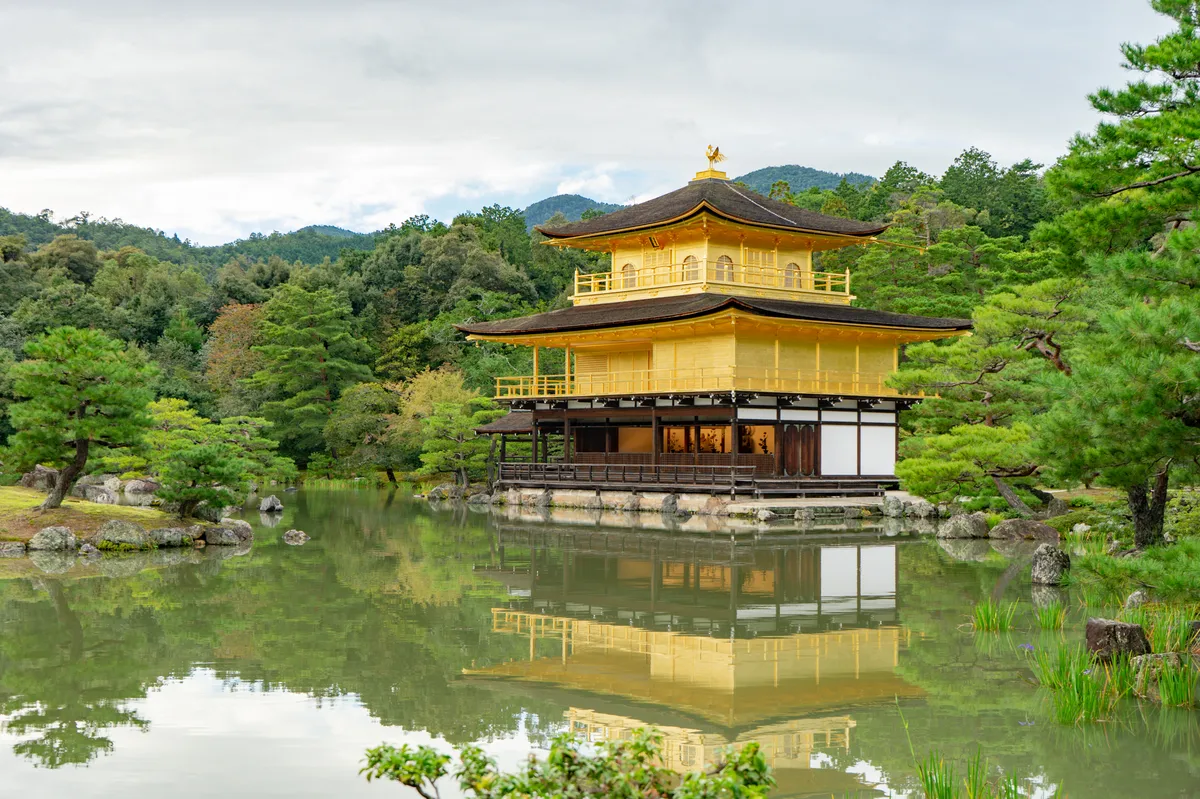
Kinkakuji (Golden Pavilion)
A Zen temple covered in gold leaf located in northern Kyoto. Originally a shogun’s retirement villa, it has been rebuilt several times, most recently in 1955 after a fire.
30 min
Ninnaji Temple
World Heritage Site and head temple of the Omuro School of Shingon Buddhism, founded in 888. Its current buildings date from the early Edo Period.
3 min
Shugakuin Imperial Villa
Built between 1655 and 1659 by Emperor Gomizuno, this villa complex includes Upper, Middle, and Lower areas with gardens and traditional imperial buildings. It is managed by the Imperial Household Agency.
30 min
Kibune
A small town in Kyoto’s northern mountains featuring Kifune Shrine, dedicated to the god of water and rain. The shrine is known for omikuji fortunes that reveal messages when dipped in water.
30 min
Kurama Town
A rural town less than one hour from Kyoto’s center, known for Kurama-dera temple and Kurama Onsen hot springs. Kurama Onsen is a 10 minute walk from the train station. Guests use the baths free, while day visitors pay 2500 yen (weekday), 2700 yen (weekend) for all baths or 1400 yen (weekday), 1600 yen (weekend) for only the outdoor bath.
3 min
Ryoanji Temple
Site of Japan’s most famous rock garden, a rectangular plot of pebbles with 15 rocks arranged so that one is always hidden from any viewpoint. The temple dates back to 1450.
30 min
Arashiyama
A western Kyoto district popular since the Heian Period, featuring the Togetsukyo Bridge, bamboo groves, temples, shops, and riverboat rentals.
3 min
Katsura Imperial Villa
An example of Japanese architecture and garden design completed in 1645. Visiting requires joining a guided tour that follows a circular path around a central pond.
3 min
Daikakuji Temple
Located in northern Kyoto’s Sagano district, this large temple was originally Emperor Saga’s detached palace built in the early 800s. Converted into a temple 30 years after his death, it hosted 12th-century peace talks that reunited the Northern and Southern Imperial Courts after 50 years of civil war. It is also connected to the Tale of Genji.
3 min
Tenryuji Temple
Kyoto’s leading Zen temple in Arashiyama, founded in 1339 and a UNESCO World Heritage Site. It features temple buildings and gardens.
3 min
Yoshiminedera Temple
A Tendai sect temple on Kyoto’s western mountainside, founded in 1029 and rebuilt in 1621. It contains important Kannon statues and offers views over Kyoto.
3 min
Togetsukyo Bridge
Arashiyama’s landmark bridge originally built during the Heian Period and reconstructed in the 1930s, located near a riverside park with cherry trees.
Bamboo Groves
Walking paths through bamboo groves where the tall stalks sway in the wind. Bamboo has been used locally for making baskets, cups, and mats for centuries.
+ 11 more places this tour can include
Languages
Cancellation policy
- Cancel at least 24 hours before start for a full refund.
Additional info
More things to do in Kyoto
- Samurai School in Kyoto: Samurai for a Day Cultural Lesson
- Kyoto Night Walking Bar Hopping Tour in Pontocho with 3-4 Drinks and Dishes
- Kyoto Samurai Experience with Sword Training and Zen Meditation
- Private Tea Ceremony and Sake Tasting in a 300-Year-Old Kyoto Samurai House
- Kyoto Tea Ceremony at Camellia Flower Teahouse
- Kyoto Izakaya Style Cooking Class with Dinner Included