
Porto Historical Center Guided Tuk Tuk Tour
by Portuk
Choose from 4 available options
How do you want to book?
Book on Viator Confirmed right away, but you pay full price.$81.06Overview
This guided motorized tour takes about 1 hour and 50 minutes through Porto’s historical center by Tuk Tuk. The tour covers major landmarks and neighborhoods, ending with a river crossing to view the city and the Douro River. A local guide and driver lead the ride, providing commentary along the route. A glass of Port wine is included for you to enjoy during the tour. The route includes stops at Teatro Nacional São João, a theatre built in 1910 with a façade inspired by early 20th-century French style, and the medieval Muralha Fernandina, a 14th-century city wall about 3000 steps long and 30 feet high. You visit the 12th-13th century Romanesque Porto Cathedral with a 10-minute stop, followed by a 5-minute stop at the Pelourinho stone monument in front of the cathedral. Other stops include the Episcopal Diocese of Porto, remodeled in 1737 with baroque elements, and the São Bento Railway Station, famous for its 20,000 narrative tiles and early 20th-century glass and iron roof. The tour passes Avenida dos Aliados and Praça de Carlos Alberto, known for its 18th-century origins and monuments. You see the 19th-century Fonte dos Leões fountain and visit Baroque churches Igreja dos Carmelitas and Igreja do Carmo, notable for rococo altarpieces and tile façades. The route continues through Cordoaria Garden, known for its 19th-century landscaping, and stops at Torre dos Clérigos, a baroque bell tower visible throughout the city. The late 16th-century Mosteiro de São Bento da Vitória is included, along with the neoclassical Palácio da Bolsa, home to the Arabian Room and accessible for reduced mobility. You see the Monument to Dom Pedro V, the Art Nouveau Livraria Lello library, and the iron-structured Mercado Ferreira Borges. The tour also visits Jardim do Infante Dom Henrique, with a monument celebrating Portuguese navigation, and the Gothic Igreja de São Francisco, known for its gilded woodwork and catacombs. The neoclassical Alfândega Porto Congress Centre, housing the Museum of Transport and Communications, is included. The last major stop is the Mosteiro da Serra do Pilar, a 16th - 17th-century circular monastery with a terrace offering views of Porto’s riverside, historic center, bridges, and Vila Nova de Gaia. The tour crosses the Dom Luís I Bridge, a two-level iron bridge from 1886, and the Ponte Infante Dom Henrique, a modern arch bridge from 2003 connecting Porto to Vila Nova de Gaia. Gratuities and monument entrance fees are not included. The tour requires at least two people and operates in groups of up to four per Tuk Tuk, with multiple vehicles used for larger parties. Times may vary due to traffic, and children must be accompanied by adults.
Highlights
What's included
What's not included
Itinerary
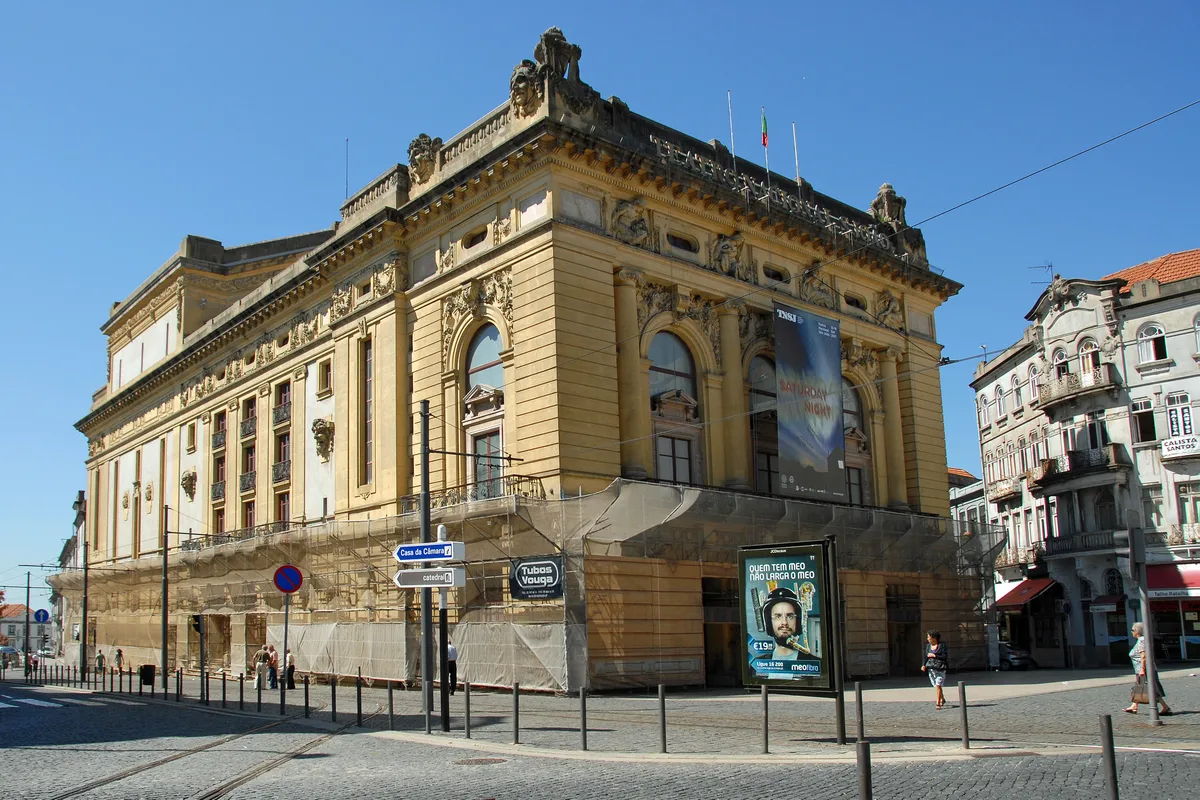
Teatro Nacional Sao Joao
Built in 1910 on the ruins of the Real Theatre that burned down in 1908, this building features a façade inspired by early 20th-century French Luis XVI style. Designed by Marques da Silva, it serves to present theatre shows across genres and promote classic and contemporary drama. It connects to the Carlos Alberto Theatre and São Bento da Vitória monastery.
Muralha Fernandina
A historic military wall built between 1368 and 1437 with funds from wine taxes. It extends about 3000 steps and averages 30 feet in height, representing an important part of Porto's defensive architecture.
Catedral do Porto
A Romanesque cathedral constructed in the 12th and 13th centuries, expanded and restored up to the 20th century to reflect a medieval appearance. The stop lasts about 10 minutes.
10 min
Pelourinho Se Catedral Porto
A stone monument representing local government placed in 1945 after demolishing surrounding 18th-century buildings in 1940. The monument replicates a 1797 drawing and is located on a paved terrace near the cathedral, with a 5-minute visit.
5 min
Episcopal Diocese of Porto
Likely built in the 13th century and remodeled in 1737 by Nicolau Nasoni. The façade features a full arch with pilasters, a decorated fronton with a bishop's coat of arms, and framed windows with frontons, visited for about 5 minutes.
5 min
Sao Bento Railway Station
Located in central Porto and built in the early 20th century, it has a glass and cast iron roof by architect Marques da Silva. The lobby is decorated with 20,000 narrative tiles painted by Jorge Colaço, with a 10-minute stop.
10 min
Avenida Dos Aliados
A square originating in the early 18th century, initially called Praça Nova. It was bordered by medieval walls and urban palaces, now lost, creating a spacious urban area.
Praca de Carlos Alberto
Formerly Praça dos Ferradores, where blacksmiths worked. The 18th-century Palace of Viscondes de Balsemão is on the east side. Named after King Charles Albert of Sardinia who stayed here in exile. Features a monument to Portuguese soldiers of the Great War.
Fonte dos Leoes
A 19th-century fountain cast in France by the Val d’Osne foundry, mostly a copy of a fountain in Leicester, England, constructed by the French company Compagnie Générale des Eaux pour l'Etranger. The stop is about 5 minutes.
5 min
Igreja dos Carmelitas
A 17th-century church with a classical façade from the 1850s, attributed to Nicolau Nasoni. The rococo altarpiece inside was seen as stylistically revolutionary. The building is a national monument.
Igreja do Carmo
Built in the late 18th century, this rococo church features interior carvings and a lateral façade covered with tiles added in 1912, designed by Silvestre Silvestri. The tiles depict scenes related to Our Lady. It is a national monument.
Cordoaria Garden
Also called João Chagas Garden since 1924, named after rope makers who worked here for about 200 years. The garden was redesigned in 1865/1866 by German landscaper Emile David. It contains statues of Ramalho Ortigão, António Nobre, sculptures by Juan Muñoz, and 'O rapto de Ganímedes'. It was remodeled in 2001 as part of Porto's European Capital of Culture events.
Torre dos Clerigos
Baroque church bell tower visible across Porto, symbolizing the city. The stop is about 5 minutes.
5 min
Mosteiro de Sao Bento da Vitoria
A late 16th-century monastery declared a national monument in 1977. Restored between 1985 and 1990, it hosts Benedictine monks, the Porto National Orchestra, and the Porto District Archives. The Noble Cloister is used for theatrical performances and concerts, linked to the Teatro Nacional de S. João.
Palacio da Bolsa
Neoclassical Stock Exchange Palace built in 1842 as the Commercial Association's headquarters. It is a national monument featuring the Arabian Room and serves as a cultural and conference center. Included in the Urban Wine Route and accessible for people with reduced mobility via a side entrance.
Monumento a Dom Pedro V
Unveiled in 1866, this statue by sculptor Célestin Anatole Calmels stands on a two-sided pedestal depicting the donation of Dom Pedro's heart and his arrival in Mindelo. The statue shows Dom Pedro offering the constitutional charter to Porto.
Livraria Lello
Opened in 1906, this library has an Art Nouveau façade with neo-Gothic details. Inside, painted plaster imitates wood, featuring a reinforced concrete staircase and a large stained-glass skylight bearing the library’s monogram and motto 'Decus in Labore'.
Mercado Ferreira Borges
Constructed in 1885 to replace the old Ribeira Market, it functioned as a market briefly. It is an example of iron architecture later converted into an entertainment venue, now home to the Hard Club.
Jardim do Infante Dom Henrique
A square dating from 1885, surrounded by Mercado Ferreira Borges and Palácio da Bolsa. It includes a small garden and an underground car park, with a monument honoring Infante D. Henrique completed in 1900 to mark the 500th anniversary of his death.
Iglesia De San Francisco
Porto’s main Gothic church, begun in the 14th century and noted for its Baroque gilded interior from the 17th and 18th centuries. Includes the Tree of Jesse and catacombs. It is a national monument since 1910 and a UNESCO World Heritage site since 1996.
Alfandega Porto Congress Centre
A 19th-century neoclassical building with two facades facing the Douro River and the city. It uses iron combined with stone, brick, and wood for functional spaces. Since 1987, it houses the Museum of Transport and Communications and operates as a congress center.
Mosteiro da Serra do Pilar
Built from 1538 to about 1670, this monastery was initially for Augustinian friars. It was used by the liberal army during the 1832-1834 Civil War and later restored. Notable for its circular church with a domed balcony and circular cloister with 36 Ionic columns, unique in Portugal. The terrace offers views over Porto’s riverside, historic center, bridges, and Vila Nova de Gaia. The stop lasts about 15 minutes.
15 min
Dom Luis I Bridge
Designed by Teófilo Seyrig, a student of Eiffel, this 395-meter-long and 8-meter-wide two-level iron bridge was opened in 1886. Its arch is the world's largest forged iron arch. The top deck carries Porto’s metro and connects the cathedral area to Vila Nova de Gaia.
Ponte Infante Dom Henrique
Opened in 2003 and designed by engineer Adão da Fonseca, this 371-meter-long and 20-meter-wide arch bridge replaced the upper deck lane of Dom Luís I Bridge. It has a span-rise ratio of 11.2 and a 280-meter arch span, a world record. It connects the Fontaínhas area to Oliveira do Douro in Vila Nova de Gaia.
Meeting point
In front of Café Batalha.
End point
In front of Café Batalha.
Languages
Cancellation policy
- Cancel at least 24 hours before start for a full refund.
Additional info
More things to do in Porto
- Porto Harry Potter Guided Tour: São Bento Station, Café Majestic, Livraria Lello
- Porto Food Tour with 8 Tastings Including Custard Tart and Bifana
- Geres National Park Full-Day Small Group Tour with Picnic from Porto
- 516 Arouca Suspension Bridge, Paiva Walkways and Aveiro Day Trip from Porto
- Peneda-Gerês National Park Day Trip: Waterfall, Lagoon, Old Village, and Lunch from Porto
- Douro Valley 10-Hour Panoramic Cruise with Lunch from Porto to Régua